Caden West Obituary, Cause of Death – 27-Year-Old Remembered for His Passion and Legacy
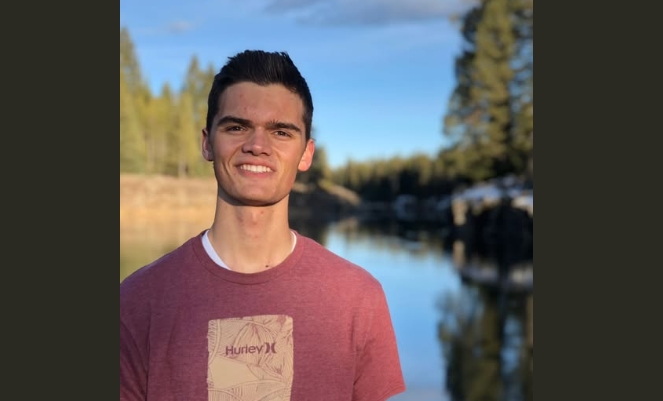
Caden West Obituary-It is always a profound tragedy when a bright, burning light is extinguished far too soon. On August 1, 2026, the tight-knit community of Pocatello, Idaho, and the broader aviation world lost an incredible soul. Caden Max West, a vibrant 27-year-old with a heart full of dreams and eyes set firmly on the skies, passed away following a devastating single-engine plane crash at the Blackfoot City Airport. This was not just a news headline or a fleeting moment on a local broadcast. This was the loss of a son, a brother, a devoted friend, and a young man who was on the absolute precipice of achieving everything he had ever worked for. Caden was a pilot who loved the freedom of the clouds, and he was taking his best friends up to celebrate a major milestone when the unthinkable happened.
When you hear about the Caden West obituary and cause of death, it is easy to get lost in the technical details of the aviation accident. But to truly understand the weight of this loss, you have to look at how he lived. He packed a remarkable amount of life into his short twenty-seven years. He was the kind of guy who didn’t just talk about his dreams; he aggressively pursued them. Whether he was standing in the freezing snows of Alaska filming a legendary dog sled race, knocking on doors during a religious mission in Ohio, or calculating complex financial models at college, Caden gave everything his full effort. His passing has left an unfillable void in the hearts of his parents, Jason and Maxine, his brothers, and the countless friends who looked up to him. This comprehensive look into his life, the tragic accident, and the legacy he leaves behind is a testament to a young man who, in the words of his grieving but immensely proud father, simply “did it right.”
Who Was Caden West? The Making of a Passionate Aviator
To understand the magnitude of this loss, you have to understand the foundation upon which Caden was built. He wasn’t just a guy who liked airplanes. He was a deeply grounded individual whose character was forged by a strong family, intense discipline, and a natural curiosity about how the world worked.
Early Years, Family Foundations, and Eagle Scout Honors
Growing up in Pocatello, Idaho, offers a specific kind of childhood. It is a place where the mountains meet the sky, where outdoor adventure is just a step away, and where family values form the bedrock of the community. Caden was raised in a home that prioritized hard work, loyalty, and faith. His parents, Jason and Maxine West, cultivated an environment where their boys were encouraged to push their limits while always looking out for one another. Caden and his brothers were inseparable. They weren’t just siblings; they were best friends who talked every single day. His brothers wanted to be him, and he loved them right back with a fierce, protective loyalty.
One of the earliest indicators of Caden’s drive was his achievement of the Eagle Scout rank. Anyone familiar with the Boy Scouts of America knows that becoming an Eagle Scout is no small feat. It requires years of dedication, the mastering of countless survival and life skills, and the successful execution of a significant community service project. Earning this rank proved early on that Caden possessed a servant’s heart and a relentless work ethic. It taught him leadership, emergency preparedness, and the importance of community—skills that would later define his adult life. The discipline required to map out a trail, survive in the wilderness, and lead a team of peers laid the exact groundwork needed for a career in aviation, where precision and calm under pressure are absolute requirements. He was a young man deeply influenced by his grandfathers, Max Hanks and Henry West, carrying their legacy of grit and honor into his everyday actions.
A Mission to Cincinnati: Faith, Resilience, and Dedication
Following his early years, Caden’s commitment to his faith led him to serve a two-year mission for The Church of Jesus Christ of Latter-day Saints in Cincinnati, Ohio. Serving a mission is a transformative experience. It pulls a young person out of their comfort zone, drops them into a new environment, and asks them to dedicate every waking moment to serving others and sharing their beliefs. For Caden, this time in Cincinnati was monumental.
Imagine being a young man far from the familiar mountains of Idaho, navigating the urban and suburban landscapes of Ohio. This required immense emotional resilience. Missionaries face rejection, extreme weather, and the heavy emotional burden of trying to help people through their most difficult life challenges. Caden walked those streets with the same determination he applied to every other aspect of his life. He learned how to communicate with people from all walks of life, how to listen with deep empathy, and how to maintain an unwavering positive attitude even when circumstances were tough. This mission solidified his internal moral compass. The patience and interpersonal skills he developed in Cincinnati were the very traits that later made him such a beloved figure among his friends and the aviation community. People gravitated toward Caden because he genuinely cared about them—a trait honed during his years of selfless service.
Educational Pursuits and an Adventurous Spirit
Caden’s thirst for knowledge was insatiable. He was never content to just sit still. He wanted to understand the mechanics of the world, whether that meant the fluctuating numbers of the stock market or the survival tactics required in the planet’s harshest environments.
Brigham Young University-Idaho and the Discipline of Finance
After returning from his mission, Caden enrolled at Brigham Young University-Idaho (BYU-Idaho), a school known for its rigorous academic standards and strong moral code. He chose to pursue a degree in finance. Now, finance might seem like a sharp departure from the adventurous life of an aspiring pilot, but for Caden, it made perfect sense. He had a naturally analytical mind. He loved numbers, patterns, and the strategy behind investments.
During his time at BYU-Idaho, he dove deep into the complexities of macroeconomics, corporate finance, and personal wealth management. His father, Jason, later recalled that he and Caden shared a special, almost exclusive language. They would spend hours talking about business strategies, investing, motorcycles, and, of course, flying. A finance degree wasn’t just a piece of paper for Caden; it was a tool. Flight school is notoriously expensive, and a career in aviation requires significant financial planning and capital. Caden approached his education as a necessary stepping stone to fund his ultimate dreams. He understood the value of a dollar, the importance of long-term planning, and the discipline required to turn an ambitious dream into a tangible reality. He never stopped studying. Even after he graduated, he remained fiercely curious, reading constantly and looking for new ways to expand his understanding of the world.
Filming the Alaska Iditarod: A Call to the Wild
Perhaps the most fascinating chapter of Caden’s young life was the two years he spent working on a film crew covering the Alaska Iditarod. The Iditarod Trail Sled Dog Race is an annual long-distance sled dog race run in early March from Anchorage to Nome, entirely within the brutal, unforgiving wilderness of the U.S. state of Alaska. It is often called the “Last Great Race on Earth.”
Working a film crew in this environment is not for the faint of heart. We are talking about sub-zero temperatures that can freeze the moisture in your breath instantly. We are talking about lugging heavy, delicate camera equipment across miles of snow and ice, battling exhaustion, frostbite, and the sheer unpredictability of the Alaskan wild. Caden thrived in this environment. For two years, he documented the incredible endurance of the mushers and their dog teams. This experience required extreme physical stamina and acute technical problem-solving. If a camera battery dies because of the cold, you have to figure out a solution immediately. If a snowmobile breaks down miles from civilization, you have to fix it. This rugged, intense environment further sharpened Caden’s mechanical aptitude and his ability to remain incredibly calm under severe stress. When you can handle the chaotic, freezing wilderness of the Iditarod, handling the complex instruments of an airplane cockpit probably feels like second nature.
The Dream of Flight: Caden’s Aviation Journey
Despite all his varied interests, there was one true north in Caden’s life: aviation. He didn’t just like airplanes; he was captivated by them. The sky wasn’t just a place above him; it was a destination he was determined to conquer.
The Pursuit of the Commercial Airline Dream
Caden’s ultimate goal was to become a commercial airline pilot. For those outside the aviation industry, it can be hard to grasp just how much dedication this requires. You don’t just sign up and get a job flying a Boeing 737. It requires hundreds, eventually thousands, of hours of flight time. It requires passing grueling written exams, intense practical check rides, and obtaining various certifications: Private Pilot, Instrument Rating, Commercial Pilot, and Multi-Engine Rating.
Caden was chasing this dream with everything he had. He was a familiar face in the local Idaho aviation community. He spent countless hours at the local airfields, talking with veteran pilots, studying weather patterns, and logging flight hours. The aviation community is a tight-knit brotherhood. Pilots share a mutual respect because they all know the risks and the immense discipline the craft demands. Caden was respected not just for his raw flying talent, but for his humility and his eagerness to learn. He was building his hours step by step, inching closer to the day he would put on the epaulets of a commercial airline captain. He shared this passion generously, always eager to take friends and family up in the air to show them the world from his favorite perspective.
Understanding the Aircraft: The Mechanics of Small Engine Planes
To appreciate Caden’s world, it helps to understand the machines he operated. On the night of his passing, he was involved in a small engine aircraft, typical of the kind used for training and building flight hours—like a Cessna 172 or a Piper Cherokee. These aircraft are the backbone of civilian aviation. They are remarkable pieces of engineering, relying on basic aerodynamic principles and reliable, air-cooled piston engines.
Unlike massive commercial jets with automated fly-by-wire systems, flying a small single-engine plane is a highly tactile, hands-on experience. The pilot feels every shift in the wind, every bump of turbulence, and every change in engine RPM. You fly by the seat of your pants as much as you fly by the instruments on the dashboard. Mastering these aircraft requires a deep understanding of physics, meteorology, and mechanical engineering. You have to know how to manage fuel mixtures at different altitudes, how to calculate weight and balance to ensure the plane’s center of gravity is safe, and how to execute emergency procedures flawlessly. Caden knew these machines inside and out. He respected the mechanics of flight and the unforgiving nature of gravity. His dedication to mastering these elements makes the events of August 1st all the more heartbreaking, as it highlights that even with immense skill and preparation, aviation carries inherent, unavoidable risks.
The Tragic Night: August 1, 2026
The night of August 1, 2026, was supposed to be a night of pure celebration. It was a Saturday, the weather was typical for an Idaho summer evening, and the mood was triumphant.
The Celebration Flight at Blackfoot Airport
One of Caden’s close friends had recently achieved a major milestone: earning a new pilot’s license. In the aviation world, this is a massive cause for celebration. It represents months of studying, thousands of dollars spent, and the overcoming of a major personal hurdle. To celebrate, Caden, his brother Myles West, and their good friend Jaxson Homer decided to go up for a quick, celebratory flight.
They headed to the Blackfoot City Airport. The plan was simple and joyful: a short ride around the area to enjoy the night sky and celebrate a hard-earned achievement. It was supposed to be a quick trip, just a few guys sharing their mutual love for the open sky. They boarded the aircraft, completed their pre-flight checks, and taxied down the runway. At approximately 11:00 PM, they took off into the dark Idaho night.
The Crash and the Frantic Aftermath
Tragically, something went terribly wrong shortly after the plane was airborne. The exact sequence of events in the cockpit remains under investigation, but the aircraft lost altitude and crashed near the north end of the Blackfoot Airport, coming to a devastating rest across a nearby roadway. The sheer violent force of an aviation impact is unimaginable. The sudden deceleration and structural collapse of the aircraft resulted in catastrophic injuries.
First responders from the Blackfoot Police Department and local emergency medical services rushed to the scene following 911 calls. They encountered a horrific sight. Despite their rapid response and heroic efforts, Caden West succumbed to blunt force trauma caused by the impact. The young man who had packed so much life into twenty-seven years was gone.
Meanwhile, a frantic, agonizing drama was unfolding behind the scenes. Around midnight, Jaxson Homer’s parents, Travis and Tana, received a heart-stopping phone call from Caden and Myles’ parents, Jason and Maxine. The West family had just been notified by authorities that their son Caden was dead, and they were desperately trying to find out if Jaxson was okay. The Homers used a tracking app to locate Jaxson’s phone, discovering to their horror that it was at Eastern Idaho Regional Medical Center (EIRMC). The shock and devastation of that midnight realization is a pain no parent should ever have to endure.
Surviving Passengers: The Road to Recovery for Myles West and Jaxson Homer
Miraculously, Myles West and Jaxson Homer survived the initial impact, though their injuries were severe and life-threatening. They were rushed to EIRMC, an advanced trauma center equipped to handle such catastrophic events.
Myles suffered extensive trauma, including severe head bruising, a dislocated hip, and a broken nose. The physical pain was undoubtedly excruciating, but the emotional trauma of losing his brother and best friend right beside him is a burden that is impossible to quantify. Jaxson also faced a brutal battle for recovery. Both young men were thrust into a desperate fight for their lives in the intensive care unit. Myles showed incredible resilience and was released from the hospital a few days later, a small miracle amidst a sea of grief. Their survival is a testament to human endurance, but their road to full physical and psychological recovery will be long and incredibly difficult. The community has rallied around them, offering prayers, support, and financial assistance as they navigate this horrific aftermath.
The Investigation: FAA and NTSB Protocols
Whenever a fatal aviation accident occurs in the United States, a highly structured, rigorous federal investigation is immediately launched. The Federal Aviation Administration (FAA) and the National Transportation Safety Board (NTSB) are tasked with finding out exactly why the plane fell from the sky.
How the NTSB Reconstructs Aviation Accidents
The NTSB does not deal in guesses; they deal in forensic facts. When an incident like the Blackfoot Airport crash happens, an NTSB “Go Team” is often dispatched, or regional investigators are assigned to take total control of the crash site. Their job is meticulous and agonizingly slow.
First, they document the entire debris field. Every piece of metal, every sheared bolt, and every broken instrument dial is photographed, mapped, and cataloged. They look at the ground impact scars to determine the angle and speed at which the aircraft hit the earth. Once the site is documented, the wreckage is typically recovered and transported to a secure hangar where investigators attempt to physically reconstruct the aircraft, much like a macabre jigsaw puzzle.
They will tear down the engine completely. They check the oil filters for metal shavings that might indicate catastrophic internal failure. They examine the spark plugs, the magnetos, and the fuel lines. They look for “control continuity,” meaning they trace the cables from the pilot’s control yoke all the way back to the elevators and ailerons to ensure they weren’t snapped prior to impact. They also look at metallurgy—examining broken metal under microscopes to see if a part failed due to sudden impact stress or long-term metal fatigue. It is a brilliant, exhaustive scientific process designed to ensure that if a mechanical flaw exists, it is found and corrected fleet-wide to prevent future tragedies.
Technical Analysis versus Human Factors in Flight
Beyond the machine, the NTSB deeply investigates the human factors and the environment. They pull all available weather data for Blackfoot on the night of August 1st. Was there a sudden microburst? Unseen icing conditions? A drastic shift in wind shear?
They also look at the pilot. They review Caden’s logbooks to examine his recent flight experience, his rest periods, and his overall health. Night flying carries its own unique set of risks, including spatial disorientation, where a pilot’s inner ear tricks them into thinking they are flying level when they are actually turning or descending. The lack of visual horizon at night can make even a brief distraction deadly. The investigation will take months, sometimes up to a year, to release a final report detailing the probable cause. Until then, the aviation community waits patiently, knowing that the ultimate goal is not to assign blame, but to uncover the truth and improve safety for every pilot who takes to the skies.
The Legal Philosophy of Loss and Liability
The sudden, violent death of a young person inevitably brings up complex legal and philosophical questions. When a plane crashes, it is not just a tragedy; it is an event that triggers massive legal frameworks designed to navigate liability, compensation, and accountability.
Aviation Law and Wrongful Death Frameworks
Aviation law is a highly specialized, incredibly complex field. Unlike a car accident, where fault is often easily determined by a police officer at an intersection, aviation accidents involve federal regulations, manufacturer warranties, maintenance facility liabilities, and pilot duty of care.
In a wrongful death framework following a plane crash, legal experts must determine if there was negligence. Did a mechanic fail to properly torque a bolt on the engine? Did the aircraft manufacturer know about a design flaw that they failed to issue a recall for? Or was it an unavoidable act of God, like an undetectable weather anomaly? The philosophy behind wrongful death suits in aviation is not merely about financial compensation; it is about restorative justice. It is about forcing massive corporations to change their safety protocols. It is about ensuring that a family’s loss translates into a safer environment for society. The burden of proof is high, and the emotional toll on the surviving families who must endure years of litigation can be devastating. However, it is a necessary pillar of our legal system that ensures accountability in an industry where mistakes are almost always fatal.
Media Presence and the Public Sphere: Contrasting High-Profile Cases with Private Tragedy
How society, and specifically the media, handles death, liability, and justice is a fascinating philosophical study. The way we process a heartbreaking local tragedy like the Caden West crash stands in stark, striking contrast to how the public sphere consumes high-profile legal and personal downfalls.
The Spectacle of Justice: Lessons from Harvey Weinstein and Rudy Giuliani
Look at the media circuses surrounding massive legal and public figures like Harvey Weinstein or Rudy Giuliani. These cases dominate the global news cycle, but they do so through the lens of scandal, adversarial combat, and punitive destruction. In the case of Harvey Weinstein, the legal philosophy centered on criminal accountability for decades of horrific abuse. The media presence was a feeding frenzy, utilizing the spectacle of his downfall to fuel a massive social movement. The coverage was inherently adversarial, focused on dismantling a corrupt power structure.
Similarly, the legal battles surrounding Rudy Giuliani—involving defamation suits, massive financial judgments, and political scandal—highlight a media ecosystem obsessed with moral decay and political theater. The legal philosophy here revolves around the limits of free speech, the consequences of public defamation, and the punitive financial ruin of a once-respected figure. In these high-profile instances, the media acts as a gladiator arena. The public tunes in to watch the mighty fall. The coverage is loud, aggressive, and entirely devoid of empathy, because the subjects are viewed through the lens of their alleged or proven wrongdoings.
The Dignity of Private Grief and Local Journalism
Now, contrast that toxic media spectacle with the handling of Caden West’s passing. When a young, beloved community member dies in a tragic accident, the media’s role shifts entirely. The legal philosophy changes from punitive destruction to protective mourning and restorative justice. Local journalism and aviation news outlets did not treat Caden’s death as a scandal to be exploited. Instead, the media presence became a tool for communal healing.
Outlets like East Idaho News and various aviation forums handled the story with profound dignity. The focus was not on assigning aggressive blame, but on honoring a life well-lived. The media served as a digital town square where people could share memories, organize support for the surviving passengers, and process their collective grief. This highlights a crucial difference in our society’s legal and media philosophy: while we use the press to ruthlessly tear down corrupt titans in the name of justice, we use it to gently lift up and memorialize the everyday heroes who make our local communities beautiful. Caden’s story reminds us that the most impactful legacies are not those built on power and controversy, but those built on quiet service, passionate dreams, and genuine kindness.
The Community Response and Collective Mourning
The true measure of a person’s life is often seen in the wake of their passing. The response to Caden West’s death was not just sadness; it was a massive, overwhelming outpouring of love, respect, and communal solidarity that spanned across state lines and through the entire aviation industry.
Tributes from the Aviation Community and Beyond
The Idaho Aviation Association and various online pilot communities lit up with tributes for Caden. Pilots from all over the country, many of whom had never even met him, expressed their deepest condolences. They understood the shared risk of their profession and felt the loss of a brother in the sky. Social media was flooded with pictures of Caden smiling in cockpits, hiking in the mountains, and spending time with his family.
Friends remembered him as the guy who would drop everything to help you fix your car, the guy who always had a positive word when you were struggling, and the guy whose laugh could light up a hangar. His father’s heartbreaking but beautiful tribute on social media painted a picture of a young man who was the “spitting image” of his dad—not perfect, but absolutely perfect for their family. The comments sections of these posts became sacred digital spaces where people processed their shock and shared stories of Caden’s immense generosity.
The Hands-On Burial at Byers Clan Ranch
Perhaps the most profoundly moving aspect of the community’s response was Caden’s burial. He was laid to rest at the Byers Clan Ranch, surrounded by the rugged Idaho landscape he loved so much. What happened at the gravesite was a scene of raw, holy beauty that will be etched into the memories of everyone present forever.
After the casket was lowered, there was no sterile, mechanized filling of the grave by cemetery staff. Instead, one by one, people stepped forward and picked up shovels. Friends, brothers, parents, young children, and even strangers who were moved by Caden’s story came forward to bury him by hand. There was no fanfare, no rush. It was a gritty, difficult, and deeply physical act of love. As one family friend noted, in every shovel of earth, they saw Caden’s legacy—his Servant’s Heart—being lived out by those who loved him most. People stood shoulder to shoulder, sharing the physical weight of the dirt and the emotional weight of the grief. They made sure Caden was not buried alone. It was messy, it was heartbreaking, and it was a stunning display of what it actually means to honor someone. This act of communal burial stands as a powerful testament to the impact Caden had on his world.
Caden’s Enduring Legacy
So, what is the legacy of a 27-year-old life cut tragically short? It is not found in a massive bank account, a political office, or global fame. It is found in the way he made people feel. Caden West leaves behind a blueprint for how to live a passionate, purposeful life.
“Caden, You Did It Right”
He taught his community that you shouldn’t wait to chase your dreams. If you want to be a pilot, you put in the grueling hours. If you want to see the Alaskan wilderness, you brave the freezing cold and go do it. If you believe in your faith, you dedicate years of your life to sharing it. He showed that you can be fiercely driven while remaining deeply devoted to your family.
His father summed it up perfectly in his final public goodbye: “When your mom and dad adore you, your brothers want to be you, and your friends are just plain happy they know you — you did it right. Caden, you did it right.”
Caden has now joined his beloved grandfathers, Max Hanks and Henry West. While the reunion is undoubtedly joyous on the other side, the pain of his absence will linger heavily in Pocatello and beyond. Yet, every time his friends look up and see a small Cessna carving through the Idaho sky, they will think of him. They will remember his smile, his ambition, and his unwavering loyalty. The skies might have taken him, but they also gave him his greatest joy, and his spirit will forever remain airborne.
Frequently Asked Questions (FAQs)
What was Caden West’s cause of death? Caden West passed away due to blunt force trauma sustained in a tragic single-engine plane crash at the Blackfoot City Airport in Idaho on the night of August 1, 2026. The aircraft crashed shortly after takeoff during a celebratory flight.
Who survived the Blackfoot plane crash alongside Caden West? There were two surviving passengers in the aircraft: Caden’s brother, Myles West, and a close family friend, Jaxson Homer. Both suffered severe, life-threatening injuries and were transported to Eastern Idaho Regional Medical Center (EIRMC) for intensive trauma care.
Why was Caden West flying that night? The flight was intended to be a joyous occasion. Caden, who was a passionate aviator building his hours for a career in commercial airlines, took his brother and friend up for a short, celebratory ride to honor the friend’s recent achievement of earning a pilot’s license.
What is the status of the investigation into the crash? The crash is currently under a rigorous, ongoing investigation by the Federal Aviation Administration (FAA) and the National Transportation Safety Board (NTSB). These federal agencies are conducting detailed forensic, mechanical, and environmental analyses of the wreckage to determine the precise cause of the accident. A final report may take up to a year to be published.
Where did Caden West go to college and what did he study? Caden was a proud graduate of Brigham Young University-Idaho (BYU-Idaho), where he earned a degree in finance. He used his deep understanding of business and economics to help strategically plan and fund his expensive pursuit of becoming a commercial airline pilot.
What was Caden West’s involvement with the Iditarod? Before fully dedicating himself to aviation, Caden spent two incredible years working on a film crew documenting the Alaska Iditarod Trail Sled Dog Race. He braved extreme sub-zero temperatures and harsh wilderness conditions to capture the endurance of the racers, an experience that highlighted his adventurous spirit and technical resilience.
How did the community honor Caden at his burial? Caden was laid to rest at the Byers Clan Ranch in a deeply moving ceremony. Instead of a standard mechanical burial, his family, friends, and community members took turns picking up shovels to fill his grave by hand. It was described as a raw, beautiful, and deeply communal act of love and respect for a young man who had dedicated his life to serving others.