Dr. Sidney Alexander Seegers Monroe, Louisiana, USA: Education, Ethics, and Modern Legal Philosophy
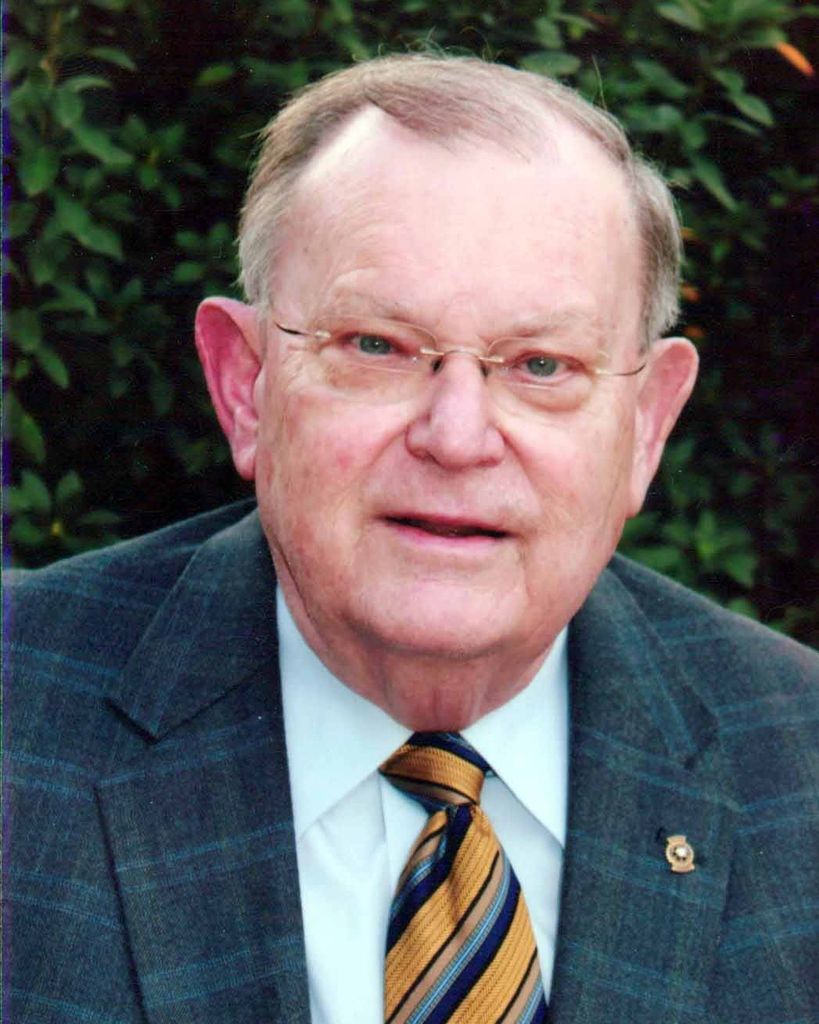
Dr. Sidney Alexander Seegers Monroe-When you hear the name Dr. Sidney Alexander Seegers Monroe, Louisiana, USA, you might immediately think of the quiet, enduring impact of a lifelong educator. You might picture the oak-lined streets of Monroe, the steady flow of the Ouachita River, and a community built on shared values, deep faith, and profound respect. Dr. Seegers, who passed away peacefully at the age of 97 in August 2026, represented the very best of local leadership. He was a man who dedicated his entire existence to the betterment of others, shaping the minds of countless students and leaving an indelible mark on his community. But to truly understand the value of a life like his, we have to look beyond the city limits of Monroe. We have to place his unwavering ethical baseline in stark contrast with the chaotic, morally complex world we live in today.
We live in an era dominated by sensationalism. Our news feeds are constantly flooded with high-profile legal battles, moral failings, and media spectacles. When we juxtapose the quiet, dignified life of a local educator with the explosive national headlines of figures like Harvey Weinstein and Rudy Giuliani, a fascinating conversation emerges. It is a conversation about ethics, legal philosophy, media influence, and the ultimate impact we leave on society. In this massive deep dive, we are going to explore the life of Dr. Sidney Alexander Seegers, and use the foundational values he championed to analyze the complex legal philosophies and high-profile cases that dominate our modern national consciousness.
The Life, Legacy, and Community Impact of Dr. Sidney Alexander Seegers
To understand the profound loss felt by the Monroe community, you have to understand the man himself. Dr. Seegers was not just a resident of Louisiana; he was a foundational pillar of its educational landscape. Living to the incredible age of 97, his life spanned decades of massive historical and cultural shifts in the United States. Yet, through it all, his commitment to education and moral character never wavered.
Early Years and a Commitment to Lifelong Learning
Born in 1929, right on the precipice of the Great Depression, Dr. Seegers grew up in an era where resilience and community reliance were not just buzzwords, but essential survival skills. The values forged during these early years undoubtedly shaped his worldview. He understood early on that education was the ultimate equalizer. It was the key to unlocking potential, escaping poverty, and building a meaningful life. This realization propelled him into a lifelong pursuit of academic excellence, culminating in his doctoral degree and a career that would touch thousands of lives.
His approach to education was never just about memorizing facts or passing standardized tests. It was about holistic development. He believed that a true educator’s job was to mold the character of a student, teaching them right from wrong, and instilling a sense of civic duty. This philosophy is something we desperately need to remember today.
Shaping Minds and Building Character at River Oaks
Nowhere was his impact felt more deeply than in his work within the local school systems, particularly at River Oaks. As a veteran educator and administrator, Dr. Seegers was known for taking a chance on young, unproven teachers. He mentored them, guided them, and helped them find their footing in one of the most challenging and rewarding professions on earth. Countless tributes following his passing highlighted this exact trait. Former colleagues and students remembered him as an outstanding human being and an educator of the finest caliber.
In a school environment, the rules are generally clear. There is a right way to behave and a wrong way. There are consequences for bad actions and rewards for good ones. Dr. Seegers enforced these rules with a blend of strict discipline and profound empathy. He created an environment where students felt safe to learn, fail, and grow. This micro-society he helped build in Monroe serves as a fascinating counterpoint to the macro-society we see on the national news, where the lines between right and wrong are constantly blurred by legal maneuvering and public relations spin.
Faith and Fellowship at St. Paul’s United Methodist Church
Beyond the classroom, Dr. Seegers was deeply rooted in his faith. As a long-standing member of St. Paul’s United Methodist Church in Monroe, his life was guided by a strong moral compass. His memorial service, officiated by Rev. Gene Bryson, was a testament to a life lived in service to a higher calling. Faith communities like St. Paul’s operate on a foundation of grace, accountability, and absolute truth. These are the same principles Dr. Seegers brought to his educational career. When a man lives his life guided by such unwavering principles, his community impact becomes generational. The seeds he planted in his students and congregants will continue to grow long after his final rest at Columbia Hills Cemetery.
The Ethical Baseline: Community Morals vs. National Legal Philosophy
Why spend so much time discussing the moral framework of a local educator? Because you cannot truly analyze the complexities of modern legal philosophy without establishing a baseline of basic human ethics. Dr. Sidney Alexander Seegers Monroe, Louisiana, USA represents that baseline.
What Monroe Can Teach Us About Fundamental Ethics
In a community like Monroe, ethics are often highly practical and deeply relational. Your reputation is built on how you treat your neighbors, how you conduct your business, and how you support the vulnerable among you. It is a philosophy rooted in the Golden Rule. If someone does something wrong, the community response is usually swift and aimed at restorative justice. The ethical framework here is straightforward: honesty is expected, integrity is mandatory, and character is everything.
The Shift from Educational Morality to Legal Reality
But what happens when we leave the quiet stability of Monroe and step into the sprawling, combative arena of the American legal system? The ethical framework shifts dramatically. In the classroom, a teacher’s goal is to find the absolute truth and guide the student toward moral clarity. In the courtroom, the goal is often entirely different.
The American legal system is adversarial. It is not necessarily designed to uncover the absolute moral truth; it is designed to resolve disputes according to the strict letter of the law. This creates a massive gap between what everyday people view as “right” and what the law views as “legal.” Understanding this gap is crucial when we start looking at high-profile legal cases. The moral clarity taught by Dr. Seegers is often absent in the murky waters of criminal defense and civil litigation.
A Deep Dive into Modern Legal Philosophy
To truly grasp why the public is often so outraged by high-profile legal outcomes, we have to take a deep dive into the philosophy that underpins our justice system. Legal philosophy, or jurisprudence, explores the nature of law and its relationship to human values, attitudes, and political communities.
The Presumption of Innocence and Zealous Advocacy
At the very core of American criminal law is the presumption of innocence. A defendant is innocent until proven guilty beyond a reasonable doubt by a jury of their peers. This is a beautiful, deeply ethical concept designed to protect citizens from the tyrannical power of the state. However, in practice, it can be incredibly difficult for the public to swallow, especially when the defendant is accused of horrific crimes.
Coupled with the presumption of innocence is the concept of zealous advocacy. Under the Sixth Amendment, every accused person has the right to legal counsel. A defense attorney is ethically bound to provide their client with a vigorous, unyielding defense, regardless of the attorney’s personal belief in the client’s guilt or innocence.
This traces back to the famous legal philosophy championed by Lord Brougham in the 19th century. During his defense of Queen Caroline, Brougham declared that an advocate knows only one person in the world to protect—their client—and must do so at all hazards and costs to others.
Defending the Indefensible: The Moral Dilemma of the Defense Attorney
Imagine trying to explain Lord Brougham’s philosophy in a middle school classroom at River Oaks. It would sound entirely counterintuitive to everything Dr. Seegers stood for. How can it be ethical to fight aggressively to free a person you know has done wrong?
This is the great paradox of legal ethics. The defense attorney’s aggressive tactics are not meant to endorse the crime, but to test the state’s evidence. If the state is going to take away a person’s life or liberty, they must be forced to prove their case flawlessly. The lawyer plays a vital role in keeping the system honest. Yet, in the court of public opinion, the lawyer is often villainized right alongside the client. This clash between community morality and legal necessity becomes wildly apparent when we look at major national cases.
Analyzing High-Profile Cases Through an Ethical Lens
When we apply the ethical baseline of a Monroe educator to the most notorious cases of our time, the friction is immediate and intense. Let’s look at two massive, paradigm-shifting cases that have defined modern legal and media culture: Harvey Weinstein and Rudy Giuliani.
The Harvey Weinstein Phenomenon: Media, Morals, and the Courtroom
There is perhaps no modern case that highlights the tension between public morality and legal procedure quite like the prosecution of Harvey Weinstein. For decades, Weinstein was an untouchable titan of the film industry, operating with impunity while rumors of his predatory behavior swirled in the shadows. When the dam finally broke, the cultural shift was seismic.
The Rise of the #MeToo Movement
The explosive reporting that exposed Weinstein birthed the global #MeToo movement. Almost overnight, society experienced a massive moral reckoning. The public demanded immediate justice. The ethical consensus was clear: Weinstein’s actions were abhorrent, and he needed to be punished. In a community setting, the ostracization would have been immediate.
But the legal system moves slower than public outrage. The prosecutors in New York and Los Angeles had to build cases that could withstand the intense scrutiny of the courtroom, abiding by the strict rules of evidence.
Legal Maneuvering, Molineux Witnesses, and Appellate Reversals
Weinstein hired some of the most high-powered, aggressive defense attorneys in the country. Their job was not to defend his character, but to poke holes in the prosecution’s case. They cross-examined survivors aggressively, attempting to highlight inconsistencies and alternative narratives. To the public, this felt like a gross violation of morality. To the legal system, it was standard zealous advocacy.
Weinstein was convicted in New York in 2020 and sentenced to 23 years in prison. He was later convicted in Los Angeles and sentenced to an additional 16 years. For a moment, it seemed that the moral outrage of the public and the strict letter of the law had aligned perfectly.
But legal philosophy is a complex beast. In 2024, the New York Court of Appeals overturned Weinstein’s New York conviction in a stunning 4-3 decision. The court ruled that the trial judge had erred by allowing prosecutors to call “Molineux witnesses”—women who testified about prior bad acts by Weinstein that were not part of the actual criminal charges. The appellate court argued that this severely prejudiced the jury, trying Weinstein for his past behavior rather than the specific crimes he was charged with.
From an educational, moral standpoint—the kind Dr. Seegers might have taught—this reversal feels incredibly unjust. If a man is a known predator, shouldn’t the jury know about his past? But from a strict legal philosophy standpoint, the appellate court was upholding a fundamental right: you can only be tried for the crime you are currently charged with, not for being a person of bad character. This massive disconnect between what feels right and what is legally required is the hallmark of our justice system.
Rudy Giuliani: The Intersection of Politics, Law, and Public Opinion
Another fascinating case study in the intersection of law, ethics, and public perception is the spectacular rise and fall of Rudy Giuliani. If Weinstein represents the clash between criminal law and public morality, Giuliani represents the messy collision of legal ethics, political loyalty, and defamation.
From America’s Mayor to Legal Peril
There was a time when Rudy Giuliani was viewed almost universally as an American hero. As a federal prosecutor in the 1980s, he pioneered the use of RICO (Racketeer Influenced and Corrupt Organizations Act) to dismantle the New York Mafia. As Mayor of New York City during the tragedy of September 11, 2001, he provided steady, comforting leadership, earning the moniker “America’s Mayor.”
At that time in his career, his actions aligned perfectly with the kind of civic virtue and community leadership championed by men like Dr. Seegers. He was protecting the community, enforcing the rules, and standing strong in the face of adversity.
But decades later, Giuliani’s trajectory shifted dramatically when he became the personal attorney for Donald Trump. Following the 2020 presidential election, Giuliani became the face of a massive, aggressive legal campaign to challenge the election results.
Defamation, Disbarment, and the Consequences of Public Influence
Giuliani’s legal strategies post-2020 blurred the lines between zealous advocacy and political theater. In press conferences, he made sweeping, explosive claims of election fraud. He specifically targeted two election workers in Georgia, Ruby Freeman and Shaye Moss, falsely accusing them of manipulating ballots.
This brings up a massive debate in legal philosophy: Where does a lawyer’s right to advocate for their client end, and where does actionable defamation begin? A lawyer is afforded wide latitude in the courtroom, but when they step outside and use the media to destroy the reputations of private citizens, the legal shield falls away.
The consequences were severe. Freeman and Moss sued Giuliani for defamation. A federal judge found him liable, and a jury ordered him to pay a staggering $148 million in damages, plunging him into bankruptcy. Furthermore, Giuliani faced disbarment proceedings in Washington D.C. and New York, with disciplinary committees arguing that his false statements violated the core ethical rules governing the legal profession. He was even indicted in Georgia on the very same RICO charges he helped popularize decades earlier.
The Giuliani saga is a tragic lesson in the erosion of ethical boundaries. When the pursuit of political victory supersedes fundamental honesty and the basic human decency owed to people like Freeman and Moss, the system inevitably collapses on itself. It is exactly the kind of cautionary tale a wise educator would use to teach students about the long-term cost of sacrificing your integrity.
Media Presence: The Local Educator vs. The National Spectacle
To fully bridge the gap between the world of Dr. Sidney Alexander Seegers and the world of Weinstein and Giuliani, we have to talk about the media. The way information is disseminated completely alters our perception of truth, justice, and character.
The Quiet Dignity of Local News in Monroe, Louisiana
In Monroe, media presence is often community-focused. Local newspapers like The News-Star and regional television stations focus on issues that directly impact the daily lives of residents. When Dr. Seegers passed away, the media presence was exactly what it should be: respectful obituaries, touching social media tributes from former students, and quiet reflection.
This kind of media presence operates on dignity. It celebrates the long, slow, unglamorous work of building a community. Dr. Seegers didn’t trend globally on Twitter. He didn’t have a crisis PR team. He didn’t need one. His reputation was built face-to-face, year after year, in the classrooms of River Oaks and the pews of St. Paul’s. His legacy is permanent precisely because it was built away from the blinding lights of national media.
The 24/7 Global News Cycle and Trial by Media
Contrast that with the media environments surrounding Weinstein and Giuliani. These cases were litigated in the court of public opinion long before they ever saw a courtroom. The modern 24/7 news cycle, fueled by social media algorithms that prioritize outrage and engagement, turns legal proceedings into gladiatorial spectacles.
In a trial by media, nuance is completely destroyed. Complex legal philosophies like the Molineux rule or the specific elements of a defamation tort are boiled down into angry soundbites. The public is whipped into a frenzy, demanding immediate outcomes. This puts incredible pressure on judges, juries, and attorneys.
When you live and die by the media, as both Weinstein and Giuliani did in their respective spheres, you eventually become a victim of it. The same cameras that built their legends were there to broadcast their downfalls. The contrast could not be sharper. The loud, chaotic media spectacle ultimately leaves a legacy of division and controversy, whereas the quiet, localized media presence of a Monroe educator leaves a legacy of warmth, gratitude, and enduring respect.
Community Impact: Why Society Needs Foundational Leaders
After diving deep into the messy, controversial world of national legal battles, it becomes incredibly clear why society desperately needs people like Dr. Sidney Alexander Seegers.
The Ripple Effect of a Dedicated Teacher
When a lawyer wins a massive case, the impact is certainly felt by the parties involved, and sometimes it sets a legal precedent. But when a teacher dedicates their life to shaping young minds, the impact is exponential. Think about the young teacher at River Oaks who credited Dr. Seegers with giving her her first job. Think about the confidence he instilled in her. She then took that confidence and passed it on to hundreds of her own students over the next thirty years. Those students became doctors, lawyers, mechanics, parents, and community leaders.
This is the ultimate ripple effect. A life lived ethically in a specific place—like Monroe, Louisiana—creates a foundation of stability that allows the rest of the country to function.
Grounding the Future in Community Values
We can debate legal philosophy all day. We can argue about appellate rulings, the limits of the First Amendment, and the ethics of defense attorneys. But none of that legal machinery works if the citizens themselves do not possess a baseline of moral character.
The courtroom is where society goes when things break down. The classroom is where society goes to prevent things from breaking down in the first place. Dr. Seegers spent 97 years on the preventative side of that equation. He showed us that you do not need to be on national television to be incredibly important. You do not need to be involved in the trial of the century to leave a profound legacy. You just need to show up, do the right thing, care for your neighbors, and pass your wisdom down to the next generation.
Frequently Asked Questions (FAQs)
Who was Dr. Sidney Alexander Seegers? Dr. Sidney Alexander Seegers was a highly respected educator, administrator, and community leader based in Monroe, Louisiana. He was deeply involved in local school systems, including River Oaks, and was a dedicated member of St. Paul’s United Methodist Church. He passed away in August 2026 at the age of 97.
Why is there often confusion between local figures and national legal queries? In the age of AI-generated content and complex search algorithms, users sometimes enter long-tail queries that mix unrelated concepts. While Dr. Seegers was an educator with no connection to national legal cases like those of Harvey Weinstein or Rudy Giuliani, analyzing his strong foundational ethics provides a fantastic lens through which to view and critique modern legal philosophy.
What is the difference between moral philosophy and legal philosophy? Moral philosophy (like the ethics taught by an educator) focuses on absolute right and wrong, character development, and the Golden Rule. Legal philosophy (jurisprudence) focuses on the strict rules of the law, procedural justice, and constitutional rights, which sometimes require defending actions that society deems morally wrong.
How did the media affect the Harvey Weinstein case? The media played a massive role by birthing the #MeToo movement and bringing intense public pressure to bear on the justice system. While the media exposed his wrongdoing, it also created a highly prejudiced environment that ultimately complicated his legal proceedings, leading to the controversial overturning of his New York conviction in 2024.
Why was Rudy Giuliani ordered to pay $148 million? Rudy Giuliani was found liable for defaming two Georgia election workers, Ruby Freeman and Shaye Moss. The jury awarded the massive sum because Giuliani used his massive media platform to repeatedly spread false, destructive claims about them, resulting in severe emotional distress and threats to their safety.
What is the Molineux rule? The Molineux rule is a legal standard in New York that generally prohibits prosecutors from introducing evidence of a defendant’s prior, uncharged crimes just to show they have a bad character or a propensity to commit crimes. This rule was central to the 2024 overturning of Harvey Weinstein’s initial New York conviction.
Why is local community impact so important today? In an era dominated by national outrage and digital isolation, local community leaders provide the foundational stability society needs. Educators, local business owners, and church leaders build the moral and practical frameworks that keep towns like Monroe, Louisiana thriving, serving as an antidote to the chaos of the national news cycle.
Final Thoughts on a Life Well Lived
As we look back on the remarkable 97-year journey of Dr. Sidney Alexander Seegers Monroe, Louisiana, USA, we are reminded of the incredible power of a quiet, purposeful life. It is easy to get swept up in the whirlwind of high-profile legal dramas. It is easy to obsess over the downfall of titans like Harvey Weinstein or the tragic political unraveling of Rudy Giuliani. Those stories dominate our screens and spark endless philosophical debates about the nature of justice, the limits of zealous advocacy, and the destructive power of modern media.
But true power, the kind of power that actually sustains a civilization, doesn’t happen in front of a cable news camera. It happens in the quiet moments of mentorship. It happens in the pews on a Sunday morning. It happens when an experienced educator pulls a struggling student aside and tells them they are capable of greatness.
Dr. Seegers understood this fundamental truth. He didn’t need to debate high-minded legal theories because he lived his philosophy every single day. He built a legacy not through controversy, but through consistency. Not through tearing others down in the court of public opinion, but by building them up in the classrooms of Ouachita Parish.
So the next time you find yourself outraged by a headline, or frustrated by the slow, often contradictory machinations of the American legal system, take a step back. Turn off the television. Disconnect from the endless scroll of social media. Remember the educators, the mentors, and the quiet leaders in your own hometown. Remember the lessons taught by men like Dr. Sidney Alexander Seegers. Because at the end of the day, a society is not saved by its lawyers or its politicians. It is saved by its teachers. And in Monroe, Louisiana, they had one of the absolute best. May his legacy of integrity, education, and unwavering moral character continue to inspire generations to come.