Jackson Yohr Obituary, Cause of Death – Big Bear City Man Dies in Car Accident
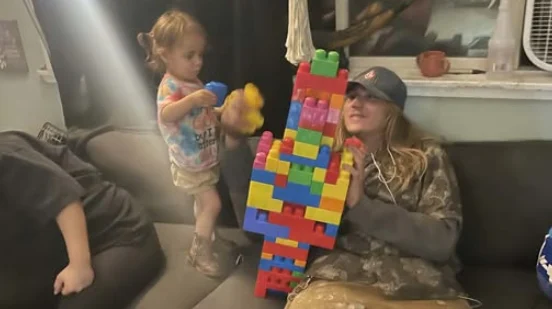
The sudden and tragic loss of a loved one is a heavy burden that ripples through an entire community. This week, the residents of Big Bear City and surrounding areas in California were struck by devastating news. The Jackson Yohr obituary, cause of death – Big Bear City man dies in car accident, has become a focal point of immense sorrow and widespread community mourning. Jackson Yohr was a vibrant, deeply cherished individual whose life was cut tragically short in a fatal traffic collision. When someone so young and full of life is taken so abruptly, it leaves a permanent void in the hearts of family members, friends, and even mere acquaintances who were touched by his warm presence.
In this comprehensive exploration, we are going to look far beyond the basic details of his passing. We will celebrate the life Jackson lived, examine the unfortunate realities of the accident, and delve deeply into the broader implications that surround such a tragedy. From the perilous nature of mountain road driving in Big Bear City to the complex legal philosophies governing fatal accidents and wrongful death claims, this article will serve as both a tribute to a life well-lived and an educational resource. We will also analyze the modern media’s role in covering tragic events, the psychological impact of sudden loss on a community, and how society seeks accountability and closure in the face of the unimaginable.
The Tragic Passing of Jackson Yohr: A Community in Mourning
It is never easy to wake up to the news that a bright light in your community has been extinguished. When word began to spread regarding the Jackson Yohr obituary, cause of death – Big Bear City man dies in car accident, a collective shockwave hit the local neighborhoods. Jackson was not just another resident; he was a recognizable, friendly face known for his authenticity and zest for life. The grief that currently blankets Big Bear City is palpable. You can feel it in the quiet conversations at local coffee shops, in the tearful embraces of neighbors, and in the overwhelming flood of digital tributes across social media platforms.
Losing someone in a car accident adds a specific layer of trauma to the grieving process. It is sudden. It is violent. It offers no time for goodbyes. One moment, a person is going about their daily routine, making plans for the weekend, laughing with friends, and the next, they are simply gone. This abrupt transition from normalcy to profound tragedy is incredibly difficult for the human brain to process. As the community attempts to navigate this dark time, they are leaning heavily on one another, sharing stories that highlight the joy Jackson brought into the world rather than focusing solely on the tragedy of his departure.
Who Was Jackson Yohr? Remembering a Vibrant Life
To truly understand the magnitude of this loss, we have to look at who Jackson Yohr was as a person. Obituaries often list the dates of birth and death, the surviving family members, and the location of a funeral, but they rarely capture the full essence of a human being. Jackson was defined by his profound kindness, his genuine spirit, and his unparalleled ability to make everyone in a room feel seen and valued.
Friends have repeatedly described him as an incredibly loyal companion. He was the kind of guy who would drop everything to help a friend in need, whether that meant assisting with a move, offering a listening ear during a tough time, or simply providing a timely joke to break the tension. In an era where many people wear digital masks and curate fake personas for social media, Jackson was unapologetically himself. He was known for being a “cool, genuine guy”—a rare and precious trait in today’s fast-paced world.
Living in a place like Big Bear City often shapes a person’s character, and Jackson was no exception. The majestic mountains, the crisp air, and the sprawling lakes offer a backdrop for an adventurous life. Jackson embraced the outdoors. He loved the natural beauty that surrounded him, and his adventurous spirit was infectious. Whether he was spending time with his family, exploring the rugged terrain of California, or just hanging out in town, he carried a positive energy that naturally drew people to him. His laughter was loud, his smile was bright, and his impact on his community was immeasurable.
The Incident: Understanding the Big Bear City Car Accident
While the primary focus remains on honoring Jackson’s memory, the circumstances surrounding his passing are a necessary part of the narrative. The Jackson Yohr obituary, cause of death – Big Bear City man dies in car accident, stems from a fatal traffic collision that has left local authorities and traffic investigators working diligently to piece together the events of that fateful day.
Car accidents are chaotic, multi-faceted events. When a fatal crash occurs, law enforcement agencies must conduct an exhaustive reconstruction of the scene. This involves analyzing skid marks, vehicle telemetry data, weather conditions, road friction, and potential mechanical failures. In mountain towns like Big Bear City, these investigations take on an added layer of complexity. While the specific details of Jackson’s crash are still being kept relatively private out of respect for his grieving family, it highlights a terrifying reality about vehicular travel.
Accidents can happen to anyone, anywhere, regardless of how safe a driver they might be. A momentary lapse in judgment, an unseen patch of black ice, a mechanical malfunction, or the reckless action of another driver can alter the course of history in a fraction of a second. The suddenness of this accident has left his loved ones grappling with the agonizing “what ifs” that inevitably follow such tragedies. As the investigation continues, the community waits for answers, hoping that understanding the mechanics of the crash might offer some small semblance of closure, even though it will never bring Jackson back.
The Hazards of Mountain Driving: Big Bear City’s Road Context
To fully contextualize this tragedy, we must examine the environment in which it occurred. Big Bear City is nestled in the San Bernardino Mountains. It is a stunningly beautiful area that attracts thousands of tourists, skiers, and nature lovers every year. However, that beauty comes with significant geographical hazards. Mountain roads are notoriously dangerous. They are characterized by steep grades, sharp hairpin turns, blind corners, and narrow shoulders that leave little to no room for error.
Driving in Big Bear requires hyper-vigilance. The elevation brings rapidly changing weather conditions. A sunny afternoon can quickly transition into a dense fog or a sudden snowstorm, drastically reducing visibility and turning dry asphalt into a slippery hazard. Even in the summer months, the winding roads demand respect. Furthermore, the mix of local drivers who are intimately familiar with the curves and tourist drivers who are hesitant and distracted creates a volatile traffic dynamic.
Historically, mountain passes in Southern California have seen a disproportionate number of severe traffic collisions compared to flat, grid-like city streets. The kinetic energy involved when vehicles navigate steep descents is immense, and brake fatigue is a common issue for larger vehicles. When we talk about the Jackson Yohr accident, it is impossible to separate the event from the overarching narrative of mountain road safety. It serves as a stark, heartbreaking reminder to every resident and visitor that these scenic routes demand our utmost attention and respect at all times.
The Legal Philosophy of Fatal Accidents and Wrongful Death
When a tragedy of this magnitude occurs, the immediate aftermath is purely emotional. But as the initial shock begins to subside, the harsh reality of legal and financial implications comes to the forefront. The legal philosophy surrounding fatal car accidents is deeply rooted in the concept of accountability, restitution, and civil justice. This brings us to the complex world of wrongful death claims.
The Anatomy of a Wrongful Death Claim In California, a wrongful death lawsuit is a civil action brought by the surviving family members of a deceased person against those whose negligence or intentional act caused the death. The philosophical foundation of this law is fascinating. Historically, under English common law, a personal injury claim died with the victim. It was cheaper for a negligent party to kill someone than to injure them, which was a horrific moral failing of the legal system. This was corrected in the 19th century with the passage of Lord Campbell’s Act, which paved the way for modern wrongful death statutes in the United States.
Today, the law recognizes that when a life is unjustly taken, the surviving family suffers immense, quantifiable damages. These are not just emotional damages, though the loss of love, companionship, and guidance is a massive part of a claim. There are also hard economic damages: funeral and burial expenses, the loss of the deceased person’s expected lifetime income, and the loss of benefits.
In a fatal car accident scenario, establishing liability is the cornerstone of any legal action. Was another driver speeding? Was a municipality negligent in maintaining safe road conditions? Did a vehicle manufacturer produce a defective part? These are the grueling questions that legal teams must answer. The process is adversarial and often painful for the family, as they are forced to relive the tragedy through depositions, evidence gathering, and court hearings. Yet, it is a necessary mechanism for seeking justice in a society that values human life.
Accountability in the Public Eye: Lessons from High-Profile Legal Battles While a tragic car accident in Big Bear City might seem worlds apart from massive celebrity scandals or political trials, the underlying legal philosophy of accountability shares distinct DNA with high-profile cases. When we look at sprawling legal battles—such as the criminal and civil cases against Hollywood mogul Harvey Weinstein, or the massive defamation lawsuits levied against former New York Mayor Rudy Giuliani—we see a legal system grappling with the concept of immense, life-altering damage caused by the actions of an individual.
In the case of Harvey Weinstein, the legal philosophy centered heavily on holding a powerful figure accountable for decades of predatory behavior that destroyed lives and careers. The civil suits that followed his criminal convictions were designed to offer financial restitution to victims who had suffered immeasurable emotional and economic harm. Similarly, the defamation judgments against Rudy Giuliani highlighted how reckless actions and negligent behavior (in his case, the dissemination of false information) can completely destroy the livelihoods and safety of innocent people, leading to massive financial penalties designed to make the victims “whole” in the eyes of the law.
How does this connect to a fatal car crash? Because the law operates on a universal principle of duty of care. Just as public figures have a duty not to defame or assault others, every single driver on the road has a legal and moral duty of care to operate their vehicle safely so as not to harm others. When that duty is breached—whether through gross negligence on a mountain road or reckless behavior in a corporate boardroom—the legal system’s response is to assign liability and mandate restitution. A wrongful death suit following a fatal crash operates on a smaller, more private scale than a televised celebrity trial, but it exists under the exact same philosophical umbrella: holding responsible parties financially and socially accountable for irreversible damages.
Media Presence and the Ethics of Reporting Tragic News
In today’s hyper-connected digital age, news of a tragedy travels faster than the speed of light. The moment an accident occurs, before the dust has even settled or emergency services have fully secured the scene, rumors begin to swirl online. This brings us to a critical discussion about media presence, digital ethics, and how we consume tragic news like the Jackson Yohr obituary.
Digital Mourning and Social Media Tributes The way society grieves has fundamentally changed over the last two decades. We have entered the era of digital mourning. When news of Jackson Yohr’s passing broke, Facebook, Instagram, and local community forums were instantly flooded with tributes. Friends posted favorite photographs, shared inside jokes that now carry a heavy weight, and wrote long, emotional paragraphs expressing their disbelief.
Digital mourning serves a dual purpose. On one hand, it creates a beautiful, permanent digital monument to the deceased. It allows people who might be geographically distant—like Jackson’s connections in San Diego—to participate in the collective grieving process. It shows the grieving family just how deeply their loved one was cherished by the world.
On the other hand, it can be incredibly overwhelming. Family members who are just trying to process the initial trauma are suddenly bombarded with thousands of notifications. Every time they open their phone, they are forced to confront the reality of their loss. Furthermore, the digital space can sometimes attract morbid curiosity from individuals who have no connection to the deceased, turning a deeply personal family tragedy into a public spectacle.
Sensationalism vs. Empathy in Modern Journalism The intersection of local journalism and personal tragedy is fraught with ethical landmines. There is an ongoing tension between the public’s “right to know” and a family’s right to privacy. Unfortunately, many digital news outlets and obituary aggregator sites prioritize clickbait and sensationalism over empathy and factual reporting. They scrape social media for details, often publishing unverified information simply to be the first to rank on search engines for a specific keyword.
Ethical journalism dictates that the media must wait for official confirmation from law enforcement and, most importantly, ensure that next of kin have been notified before publishing a victim’s name. In the case of Jackson Yohr, the rapid spread of the news meant that many people found out about his passing through a social media feed rather than a phone call. This highlights a desperate need for a return to empathetic reporting. When writing about a fatal accident, the focus should always remain on honoring the life lost and respecting the raw vulnerability of the surviving family, rather than mining the tragedy for web traffic.
The Psychological Toll on the Community and Loved Ones
The death of a young, beloved community member does not happen in a vacuum. It triggers a profound psychological response that ripples outward. The psychological toll of sudden loss is incredibly complex, manifesting in various stages of grief that are rarely linear.
For Jackson’s immediate family, the grief is an all-consuming physical and emotional pain. The psychological phenomenon of traumatic grief often leaves survivors feeling detached from reality. The brain struggles to reconcile the fact that someone who was so vibrant and present yesterday is permanently gone today. This cognitive dissonance can lead to severe anxiety, depression, and a lingering sense of survivor’s guilt.
However, the psychological impact extends far beyond the family. First responders who arrived at the scene of the accident carry the invisible scars of what they witnessed. Friends who saw Jackson just days prior are left questioning the fragility of their own lives. Even peripheral community members in Big Bear City who merely recognized him from around town feel a distinct sense of unease.
When a community experiences a collective trauma like this, it fundamentally alters the local atmosphere. It serves as a stark, undeniable reminder of human mortality. Psychologists note that communities often go through a period of hyper-vigilance following a fatal local accident. Parents hold their children a little tighter, drivers grip the steering wheel a little firmer, and people are generally more cautious. The healing process for a community takes time. It requires open communication, access to grief counseling, and the collective sharing of memories to slowly replace the trauma of the death with the warmth of the life lived.
San Diego and Big Bear: A Tale of Two Communities United in Grief
It has been noted in various tributes that Jackson Yohr’s impact was not confined solely to the limits of Big Bear City. The sorrow of his passing has reached down into San Diego, California, bridging two distinct communities in a shared experience of grief.
Jackson’s connections to San Diego highlight the expansive nature of a well-lived life. In today’s highly mobile society, our roots often spread across multiple cities and counties. Whether through previous residence, extended family, educational ties, or a network of friends built over years of travel and connection, Jackson left a mark on the coastal city just as he did in the mountains.
This dual-city mourning process is a testament to his character. It shows that he was someone who built lasting relationships wherever he went. The San Diego community is echoing the sentiments of Big Bear Lake—sharing memories of a genuine, kind-hearted man who brought light into their lives. As these two communities merge online and in person to offer condolences, it creates a massive support network for his grieving family. It proves that a person’s legacy is not bound by geography, but by the hearts they have touched along their journey.
Memorial Services and How to Support the Family
In the wake of such an overwhelming tragedy, the most common question asked by the community is, “How can we help?” The desire to offer support is a beautiful reflection of human empathy, but channeling that support in a way that is respectful and genuinely helpful requires consideration.
Funeral and memorial arrangements for Jackson Yohr are being organized to give family, friends, and the broader community an opportunity to say their final goodbyes. These services are more than just a formality; they are a vital psychological step in the grieving process. A memorial service provides a dedicated time and space for collective mourning, allowing people to physically lean on one another, share cherished stories, and celebrate a life that, while painfully short, was deeply meaningful.
For those looking to support the family during this agonizing time, it is crucial to respect their boundaries. The family has requested privacy as they navigate the darkest days of their lives. Support can be shown in myriad ways that do not intrude on their personal space. Contributing to verified memorial funds, organizing meal trains to ensure the family doesn’t have to worry about cooking, or simply sending a handwritten card sharing a specific, happy memory of Jackson can provide immense comfort.
It is also important for the community to recognize that grief does not end after the funeral. In the weeks and months to come, when the initial outpouring of support begins to wane and the rest of the world goes back to normal, Jackson’s family will still be waking up every day to a reality without him. Long-term support—checking in months down the line, remembering his birthday, and continuing to share his memory—is the true hallmark of a caring community.
Frequently Asked Questions (FAQ)
What happened to Jackson Yohr? Jackson Yohr tragically passed away in a fatal car accident in the Big Bear City, California area. He sustained fatal injuries in the crash, and his sudden death has prompted widespread mourning across his local community and in San Diego.
When and where did the accident occur? The exact time and specific location of the crash are part of an ongoing investigation by local authorities. It occurred in the Big Bear City region, an area known for its beautiful but challenging mountain roads.
How is the Big Bear City community responding? The community is devastated. There has been a massive outpouring of grief, condolences, and tributes on social media. Friends and locals are remembering Jackson as a remarkably genuine, kind, and loyal friend who brought immense joy to those around him.
Was Jackson Yohr from San Diego? While he is heavily tied to the Big Bear City community, reports indicate Jackson also had deep ties to San Diego, California. Both communities are actively mourning his loss and sharing tributes regarding his positive impact on their lives.
How can the public support the Yohr family right now? The family is currently asking for privacy as they process this unimaginable loss. The public can support them by offering respectful condolences online, attending public memorial services once announced, and contributing to any official family-approved memorial funds or meal trains.
What are the legal implications of a fatal car accident in California? When a fatal car accident occurs, local authorities conduct a thorough investigation to determine the cause and liability. Depending on the findings, the surviving family may have the right to pursue a wrongful death civil claim if the accident was caused by the negligence or reckless actions of another party, a defective vehicle part, or unsafe road conditions.
Are mountain roads like those in Big Bear inherently dangerous? Mountain roads pose unique driving challenges due to steep grades, sharp curves, unpredictable weather conditions, and limited visibility. While they can be navigated safely with caution and appropriate speed, they do require hyper-vigilance, and the margin for driver error is significantly smaller than on flat terrain.
Where can I find information about Jackson Yohr’s funeral service? Details regarding the memorial service and funeral arrangements for Jackson Yohr will be shared by his family when they are ready. Community members are encouraged to check official local obituaries or verified family communications for accurate dates and locations.
The passing of Jackson Yohr is a stark and heartbreaking reminder of the fragility of human life. We navigate our daily routines with an assumed sense of invincibility, forgetting how quickly the landscape of our lives can be violently altered. Jackson leaves behind a legacy of authenticity, friendship, and unyielding kindness. As Big Bear City and San Diego continue to mourn, they do so with the knowledge that to have known Jackson was a privilege. While the pain of his absence will linger for a lifetime, the warmth of his memory will forever serve as a guiding light to those who loved him most.