Don Nelson Obituary: NBA Star who won 5 Tittles at Celtic
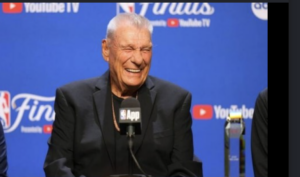
If you have been searching for a comprehensive don nelson obituary NBA coach who won 5 Tittles At celtic, you have arrived at the definitive tribute. On August 9, 2026, the basketball world lost one of its most eccentric, brilliant, and transformative figures. Donald Arvid Nelson, known affectionately as “Nellie,” passed away at the age of 86. He did not just play the game of basketball; he deconstructed it, studied its moving parts, and rebuilt it in his own visionary image. Over a sprawling career that spanned more than half a century, Nelson left an indelible mark on the hardwood. He was a five-time NBA champion as a rugged forward for the Boston Celtics, but it was his second act—a 31-year odyssey as a head coach—that truly immortalized him.
Nelson retired as the winningest coach in NBA history (a record later surpassed by Gregg Popovich), amassing 1,335 regular-season victories. But focusing solely on his win total is like looking at the Mona Lisa and only talking about the frame. Nellie changed how the game was played. He was a mad scientist in a sweat-suit, a pioneer who looked at giants and decided that speed, spacing, and shooting were the real keys to victory. Today’s NBA—a league defined by three-point shooting, positionless basketball, and floor-spacing big men—is essentially the house that Don Nelson built. From his early days in Michigan to his golden years growing coffee and cannabis in Maui, Nelson’s life was an incredible, unapologetic adventure. Let’s take a massive deep dive into the life, career, and enduring legacy of a true basketball icon.
The Dawn of a Basketball Genius
Long before the legendary shot in Los Angeles or the fast-paced offenses in Oakland, Don Nelson was just a kid with a basketball in Muskegon, Michigan. Born on May 15, 1940, Nelson grew up in an era where basketball was still finding its footing in the American sporting consciousness. He wasn’t the fastest guy on the court, nor could he jump the highest. But what he lacked in explosive, unadulterated athleticism, he more than made up for with sheer willpower, high basketball IQ, and a relentless physical edge. He learned early on that to survive in this game, you had to outwork and outthink your opponent.
Nelson took his talents to the University of Iowa, where he became a standout star for the Hawkeyes. During his collegiate career, he proved he could score with the best of them, averaging 23.8 points per game in his senior year. His stellar play caught the attention of professional scouts, leading to him being drafted 17th overall in the 1962 NBA Draft by the Chicago Zephyrs.
However, his entry into the professional ranks wasn’t a fairy tale. The NBA in the early 1960s was a grueling, unforgiving league. The pay was low, the travel was brutal, and job security was virtually non-existent. Nelson played one season for the Zephyrs before being traded to the Los Angeles Lakers. In LA, he struggled to find his footing. After two largely forgettable seasons, the Lakers waived him. For many players, being cut in your mid-20s is the end of the road. It’s the moment you pack up your sneakers, get a regular job, and tell your kids about the time you almost made it. But Don Nelson wasn’t most players. He was a fighter. And as fate would have it, a legendary coach in Boston saw something in the discarded forward that no one else did.
A Celtics Dynasty and Five Immortal Championships
In 1965, the Boston Celtics, led by the legendary mastermind Red Auerbach, picked up Don Nelson from the waiver wire. It was a match made in basketball heaven. The Celtics were in the midst of the greatest dynasty in the history of North American professional sports, anchored by the unmatched defensive brilliance of Bill Russell. Red Auerbach didn’t need Nelson to be a superstar; he needed him to be a piece of a finely tuned, unstoppable machine.
Nelson thrived in Boston. He embraced his role as a gritty, physical enforcer and a clutch scorer off the bench. He had a wildly unorthodox, one-handed jump shot that looked like it belonged in a YMCA pickup game, but it was incredibly effective. Nellie became the ultimate glue guy. He did the dirty work—setting bone-crushing screens, fighting for loose balls, and playing suffocating defense. Over his 11 seasons in Boston, Nelson became a fan favorite, a crucial rotational piece, and ultimately, a five-time NBA Champion. He won rings in 1966, 1968, 1969, 1974, and 1976.
The Shot Heard ‘Round the NBA: Game 7 in 1969
If you want to distill Don Nelson’s playing career into a single, immortal moment, you have to look at Game 7 of the 1969 NBA Finals. The narrative heading into that game is the stuff of Hollywood scripts. The aging Boston Celtics were taking on their bitter rivals, the Los Angeles Lakers, at the LA Forum. Lakers owner Jack Kent Cooke was so confident that his team, featuring Wilt Chamberlain, Jerry West, and Elgin Baylor, would finally dethrone the Celtics that he ordered thousands of celebratory balloons suspended from the rafters, ready to drop at the final buzzer.
The Celtics saw those balloons. Bill Russell notoriously told Jerry West during warmups that those balloons would be staying right where they were. The game was an absolute war of attrition. With just over a minute left in the fourth quarter and the Celtics clinging to a one-point lead (103-102), the Lakers knocked the ball loose. It bounced right to Don Nelson near the free-throw line. The shot clock was winding down. Nelson, in a desperate attempt to salvage the possession, threw up his signature one-handed jumper.
The ball arced through the smoky arena air. It hit the back iron. To everyone watching, it looked like a clean miss. But then, it bounced straight up—seemingly hanging in the air for an eternity—before dropping perfectly through the net. That shot broke the Lakers’ spirit. It secured the Celtics’ 11th championship in 13 years and cemented Don Nelson as a Boston legend. The Celtics eventually retired his No. 19 jersey, hanging it in the rafters of the Boston Garden, ensuring that no Celtic would ever wear it again.
Mastering the Craft Under Red Auerbach
Beyond the championships and clutch shots, Nelson’s time in Boston served as his doctoral program in basketball strategy. He played under Red Auerbach, Bill Russell (as player-coach), and Tom Heinsohn. From Auerbach, Nelson learned the psychological art of coaching—how to manage egos, how to intimidate referees, and how to create an ‘us-against-the-world’ locker room culture. From Heinsohn, he learned the value of a high-octane, fast-breaking offense. Nelson was taking notes the entire time. He was analyzing why plays worked, why defenses collapsed, and how rigid traditional basketball positions really were. When he finally retired as a player in 1976, he was universally respected as one of the smartest minds in the game. It was only a matter of time before he traded his shorts for a suit and tie.
The Mastermind on the Sidelines: A Coaching Journey Like No Other
Transitioning from a role player to a head coach is never guaranteed to be successful. Yet, Don Nelson made it look natural. Over his 31-year coaching career, Nelson redefined the parameters of NBA strategy. He wasn’t afraid to fail, which made him dangerous. He was a tinkerer, a coach who treated the basketball court like a blank canvas.
Transforming the Milwaukee Bucks
Nelson got his first head coaching gig with the Milwaukee Bucks during the 1976-77 season, taking over after Larry Costello resigned. He inherited a team in transition and quickly molded them into a perennial powerhouse. During the 1980s, the Eastern Conference was a bloodbath, dominated by the Celtics and the Philadelphia 76ers. Nelson’s Bucks were right there in the mix, consistently winning 50-plus games.
It was in Milwaukee that Nelson’s tactical genius first began to truly shine. Lacking a dominant, traditional point guard, Nelson looked at his roster and did something completely unorthodox. He took a 6-foot-5 small forward named Paul Pressey and handed him the keys to the offense. Pressey was strong, had incredible court vision, and could defend multiple positions. By running the offense through a forward, Nelson created massive matchup nightmares for opposing teams. This was the absolute birth of the “Point Forward” position—a concept that would later be perfected by players like Scottie Pippen, LeBron James, and Luka Doncic. Nelson won the NBA Coach of the Year award twice during his tenure with the Bucks (1983, 1985), leading them to seven straight division titles.
The “Run TMC” Era in Golden State
After a highly successful run in Milwaukee, Nelson moved out west to take over the Golden State Warriors in 1988. If Milwaukee was where Nelson invented the point forward, Golden State was where he unleashed his fast-breaking, offensive fury upon the league. He assembled a trio of highly skilled, high-scoring guards and wings: Tim Hardaway, Mitch Richmond, and Chris Mullin. Together, they formed “Run TMC” (a play on the famous rap group Run-DMC).
Under Nelson, the Warriors didn’t just walk the ball up the court; they sprinted. They pushed the tempo relentlessly, launching three-pointers and attacking the rim before the opposing defense could even set up. It was incredibly entertaining, high-octane basketball. Fans packed the arena just to see the offensive fireworks. While the Run TMC era was relatively short-lived due to Nelson trading Richmond to Sacramento in a controversial move for Billy Owens, its cultural impact was massive. Nelson proved that a team didn’t need a plodding, seven-foot center to be competitive; speed, skill, and shooting could overcome size.
A Culture Clash in New York
Nelson’s coaching journey wasn’t without its bumps. In 1995, he was hired to coach the New York Knicks. It was, from the very beginning, a massive culture clash. The Knicks of the 1990s were built on brutal, physical defense under their previous coach, Pat Riley. They were anchored by a traditional, half-court center in Patrick Ewing.
Nelson arrived with his uptempo philosophy and immediately recognized that the roster didn’t fit his style. He notoriously suggested trading Ewing to acquire a younger, more mobile Shaquille O’Neal. In New York, suggesting you trade Patrick Ewing was akin to treason. The local media crucified Nelson. The veteran players rebelled against his fast-paced system. After just 59 games, with a record of 34-25, the Knicks fired him. It was a humbling experience, but it didn’t break him. It simply proved that Nelson’s system required total buy-in and the right personnel.
The Dallas Mavericks and a European Revolution
In 1997, Nelson took his talents to Texas, becoming the head coach and general manager of the Dallas Mavericks. The franchise was a laughingstock at the time, mired in a decade of losing. Nelson completely overhauled the organization. The turning point came on the night of the 1998 NBA Draft. In a series of masterful trades, Nelson acquired an unknown, lanky 7-foot German teenager named Dirk Nowitzki and a gritty Canadian point guard named Steve Nash.
People thought Nelson was crazy. A 7-footer who wanted to shoot threes instead of posting up? A small point guard from Santa Clara? But Nelson saw the future. He gave Nowitzki the ultimate green light, actively encouraging him to shoot from the perimeter. He built an offense around the Nash-Nowitzki pick-and-pop, surrounding them with shooters. When billionaire Mark Cuban bought the team, the Mavericks had the financial backing to complement Nelson’s vision. The Mavericks became an offensive juggernaut, regularly winning 50 to 60 games and reaching the Western Conference Finals in 2003. Nelson’s belief in Nowitzki changed the way international players were scouted and fundamentally altered the trajectory of the power forward position.
The “We Believe” Warriors Miracle
Nelson left Dallas in 2005, but his magnum opus was yet to come. He returned to the Golden State Warriors for the 2006-2007 season. The Warriors hadn’t made the playoffs in 13 years. Nelson took a roster of misfits, castoffs, and fiery personalities—Baron Davis, Stephen Jackson, Matt Barnes, Jason Richardson, and Al Harrington—and turned them into a lethal, small-ball wrecking crew.
They barely squeaked into the playoffs as the 8th seed, drawing the 67-win Dallas Mavericks (Nelson’s former team) in the first round. What followed is widely considered one of the greatest upsets in sports history. Nelson knew exactly how to dismantle the Mavericks’ offense. He played small, putting Stephen Jackson on Dirk Nowitzki and running the Mavericks’ big men off the floor. The Oracle Arena crowd, draped in yellow “We Believe” shirts, provided a deafening backdrop as the Warriors aggressively shocked the world, winning the series in six games. It was the ultimate vindication of Nellie Ball. He proved that a small, fast, highly skilled team could take down a traditional juggernaut.
“Nellie Ball”: The Tactical Revolution That Changed the NBA
To truly appreciate the magnitude of this Don Nelson obituary, we have to look under the hood of his tactical philosophy. “Nellie Ball” wasn’t just a catchy nickname; it was a comprehensive re-imagining of basketball geometry and matchups.
Inventing the Point Forward As mentioned during his Milwaukee days, Nelson was the first coach to consistently run his half-court offense through a forward. Traditional basketball dictated that the shortest player (the point guard) dribbled the ball up the court, initiated the play, and passed to the big men. Nelson realized this was highly predictable. By having a 6’5″ or 6’8″ forward initiate the offense, he forced opposing teams into brutal decisions. If they put a small guard on the point forward, Nelson would have his player back them down into the post. If they put a slower forward on him, the point forward would blow by them off the dribble. This positional fluidity is the bedrock of today’s NBA.
Small Ball and Exploiting Mismatches Nelson absolutely despised playing players purely because they were tall. If a 7-footer couldn’t run the floor, pass, or hit a free throw, Nelson would bench him in favor of a 6’6″ wing who could. He popularized the concept of “small ball”—putting five players on the floor who could all shoot, pass, and dribble. This pulled massive, shot-blocking centers away from the rim, creating wide-open driving lanes for his guards. Teams simply didn’t know how to defend it. In a league obsessed with the post-up game, Nelson was playing high-speed chess while everyone else was playing checkers.
The Math Behind “Hack-a-Shaq” While Nelson was an offensive romantic, he was also a ruthless pragmatist. This was never more evident than his invention of the “Hack-a-Shaq” strategy. During games against Shaquille O’Neal, the most dominant physical force the league had ever seen, Nelson realized that playing traditional defense was a mathematical losing proposition. Shaq was going to score, and he was going to shoot a high percentage. But Shaq struggled immensely at the free-throw line.
Nelson instructed his end-of-the-bench players to intentionally foul O’Neal before he even touched the ball. The strategy was ugly. It ground the game to a halt, resulting in long, tedious free-throw shooting exhibitions. The media hated it, and fans often booed. But mathematically, it was brilliant. Giving up one point per possession (assuming Shaq hit 50% of his free throws) was statistically better than letting him dunk for a guaranteed two points. Nelson exploited a loophole in the rulebook to level the playing field against an unstoppable giant. It forced the NBA to eventually alter its rules, cementing Nelson’s status as a coach who literally broke the game to win.
Beyond the Court: Legal Philosophy, Media Presence, and Community Impact
In today’s hyper-connected, heavily scrutinized world, an NBA head coach isn’t just a tactician sketching plays on a whiteboard; they are the highly visible CEO of a massive corporate brand. They are bound by rigorous legal philosophy, strict public relations mandates, and zero-tolerance morality clauses. To fully understand Don Nelson’s era, we have to contrast it with the modern landscape—a landscape shaped by monumental cultural earthquakes.
Navigating the Public Eye in a Changing Media Landscape When we examine legal philosophy in the context of modern sports, we must acknowledge how radically the court of public opinion has shifted. We live in an era shaped by notable cases (e.g., Harvey Weinstein, Rudy Giuliani)—cases that fundamentally altered workplace accountability, media presence, and the boundaries of acceptable public behavior. The Weinstein scandal didn’t just upend Hollywood; it sent shockwaves through every major corporate structure, including the NBA. It completely revolutionized how sports franchises draft morals clauses, conduct internal HR investigations, and manage their community impact. It introduced a rigid, zero-tolerance legal philosophy regarding workplace misconduct and power dynamics.
Similarly, Giuliani’s highly publicized defamation lawsuits and legal battles serve as glaring, textbook case studies in the dangers of reckless media presence. Modern sports franchises now employ literal armies of lawyers and PR specialists to ensure that coaches, executives, and players do not expose the team to legal liability or brand degradation through their public statements. Every press conference is tightly controlled. Every tweet is vetted.
Don Nelson, however, coached through the twilight of the old era and the dawn of this new corporate hyper-vigilance. During Nelson’s heyday in the 1980s and 1990s, the media landscape was far more forgiving. A coach could have a screaming match with an owner, smoke a cigar in the locker room, openly feud with a star player like Chris Webber, or give unfiltered, blunt answers to the press without triggering a legally mandated HR inquiry or a social media cancellation campaign. Nellie was authentically himself—brash, honest, and sometimes controversial. He navigated his media presence without the safety net of modern PR firms. He didn’t rely on focus groups to gauge his community impact; he relied on his gut and his undeniable basketball acumen.
Contractual Disputes and the Legal Philosophy of the Modern NBA Nelson’s career also provided a fascinating case study in the intersection of sports and contract law. His explosive fallout with Dallas Mavericks owner Mark Cuban over unpaid deferred compensation resulted in a highly publicized arbitration case. Nelson sued Cuban and the Mavericks, arguing that he was owed millions under his contract. Cuban counterclaimed, alleging that Nelson had breached his fiduciary duties to the team.
This legal battle was a prime example of sports intersecting with hard contract law. Nelson ultimately won the arbitration, securing his payout and vindicating his position. In today’s climate, a dispute of this magnitude between a legendary coach and a high-profile billionaire owner would be heavily scrutinized through the lens of modern legal philosophy. PR firms would wage proxy wars in the media, trying to protect the brand’s community impact while managing the legal fallout. Nelson, true to form, handled it with characteristic bluntness. He looked at the contract, knew his rights, and fought for what he was owed. The contrast between Nelson’s era and the post-Weinstein, post-Giuliani corporate sports world highlights exactly how much the role of a head coach has evolved from purely a basketball tactician to a legally insulated corporate figurehead.
Community Impact and Philanthropy Despite his intense sideline demeanor, Nelson’s community impact was profound. In every city he coached, from Milwaukee to Oakland to Dallas, he was deeply involved in local charitable efforts. He regularly hosted basketball camps for underprivileged youth, silently funded community centers, and used his platform to advocate for civil rights. He famously stood by his players during times of social unrest and was a staunch supporter of the NBA’s integration of global talent, transforming the league into a truly international, inclusive community.
Life After Basketball: Maui, Poker, and Inner Peace
When Don Nelson finally walked away from the NBA in 2010, he didn’t transition into a broadcasting booth or take a cushy front-office advisory role. He wanted a complete break from the high-stress, legally complex, media-obsessed world of professional sports. So, he packed up and moved to Maui, Hawaii.
In Maui, Nellie found true inner peace. He traded his tailored suits for Hawaiian shirts and shorts. He bought a farm and started growing coffee. Eventually, as local laws evolved, he famously began cultivating his own cannabis, playfully dubbing his strain “Nellie Kush.” He hosted legendary, high-stakes poker games with local celebrities, including Willie Nelson and Woody Harrelson.
Whenever reporters would make the trek to Maui to interview him, they found a man who was completely content. He had no regrets. He loved talking about the old days, analyzing the modern game, and laughing about the battles he fought with owners, referees, and players. He watched with a proud smile as the Golden State Warriors—the franchise he helped revive—went on to win multiple championships using the exact small-ball, three-point-heavy philosophy he had pioneered decades earlier. Steve Kerr, the Warriors’ championship coach, frequently cited Nelson as a massive inspiration for his offensive system. Nelson lived out his final years exactly how he wanted: on his own terms, surrounded by friends, family, and the beautiful Hawaiian breeze.
The Lasting Legacy of Donald Arvid Nelson
How do you summarize the legacy of a man who gave 50 years of his life to basketball? You look at the game today. Every time a power forward pulls up for a trailing three-pointer, that’s Don Nelson. Every time a team downsizes its lineup to run a slower opponent off the floor, that’s Don Nelson. Every time a coach purposefully fouls a poor free-throw shooter to manipulate the math of a game, that’s Don Nelson.
He was inducted into the Naismith Memorial Basketball Hall of Fame in 2012, an honor that was long overdue. He was named one of the Top 15 Coaches in NBA History during the league’s 75th-anniversary celebration. But trophies and plaques only tell part of the story.
Nelson was a maverick in the truest sense of the word. He was a man who looked at a rigid, traditional system and dared to ask, “What if we do it differently?” He didn’t win a championship as a head coach, a fact that his critics often point to. But his impact transcends rings. He laid the intellectual groundwork for the modern NBA. He was a mentor to countless players and future coaches. He was a fierce competitor who loved the game with every fiber of his being.
On August 9, 2026, the buzzer finally sounded on Don Nelson’s incredible life. The NBA family mourns the loss of a giant, but we celebrate the undeniable reality that his fingerprints will remain on the basketball for as long as the game is played. Rest in peace, Nellie. The hardwood will never be the same without you.
Frequently Asked Questions (FAQ)
How many NBA championships did Don Nelson win as a player? Don Nelson won five NBA championships during his playing career, all with the Boston Celtics. He won titles in 1966, 1968, 1969, 1974, and 1976. He was a crucial rotational player known for his clutch shooting and physical defense.
What is “Nellie Ball”? “Nellie Ball” is the nickname given to Don Nelson’s innovative coaching philosophy. It relies on a fast-paced offense, heavy three-point shooting, and the use of smaller, highly skilled players (small ball) to create mismatches. It also heavily features the “point forward” position, where a forward initiates the offense instead of a traditional point guard.
Did Don Nelson ever win an NBA Championship as a head coach? No, despite having the second-most regular-season wins in NBA history (1,335), Don Nelson never won an NBA championship as a head coach. However, his offensive systems laid the foundation for future championship teams, most notably the modern Golden State Warriors.
Why is Don Nelson famous for the “Hack-a-Shaq” strategy? Don Nelson pioneered the strategy of intentionally fouling a poor free-throw shooter to disrupt the opposing team’s offense and exploit the mathematics of the game. He famously used this tactic against Shaquille O’Neal, leading to the term “Hack-a-Shaq.”
What happened between Don Nelson and Mark Cuban? Don Nelson and Dallas Mavericks owner Mark Cuban had a highly publicized legal dispute over unpaid deferred compensation after Nelson resigned. The dispute went to arbitration, where Nelson ultimately won, forcing Cuban to pay the millions owed on his contract. It remains a famous example of contract law and legal philosophy intersecting with sports.
Where did Don Nelson live after retiring? After retiring from coaching in 2010, Don Nelson moved to Maui, Hawaii. He lived a very relaxed lifestyle, running a coffee farm, cultivating cannabis, and hosting poker games with celebrity friends.