Jim McMullan Obituary: Veteran Actor Dies After Prolonged Illness, He is Remembered for Television and Film Career
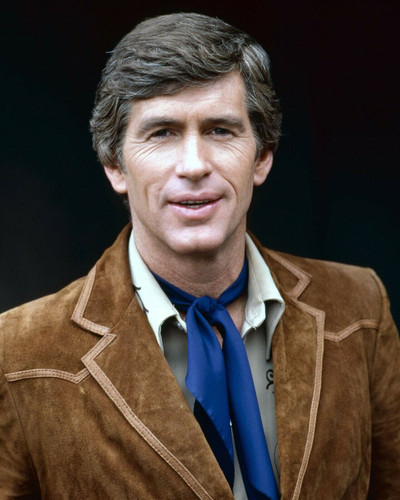
When we lose a seasoned character actor who has graced our television screens for over four decades, it feels like a quiet chapter of Hollywood history is closing its doors forever. The entertainment industry is still mourning the profound loss of Jim McMullan. The phrase “Jim McMullan Obituary: Veteran Actor Dies After Prolonged Illness, He is Remembered for Television and Film Career” has been echoing across media outlets, reminding us of the immense footprint he left behind. He passed away on May 31, 2019, at his home in Wofford Heights, California, at the age of 82.
Jim wasn’t just a guy who read lines; he was a foundational pillar of episodic television and classic American cinema. From rubbing shoulders with Jimmy Stewart to standing toe-to-toe with Robert Redford, McMullan’s presence on screen was undeniable. His death, which came after a grueling and private battle with Amyotrophic Lateral Sclerosis (ALS), marked the end of an era. But while the man may be gone, the vast body of work he created remains permanently etched in the cultural zeitgeist. In this comprehensive retrospective, we aren’t just going to look at his acting credits. We’re going to dive deep into his fascinating architectural background, his incredible stroke of Hollywood luck, the agonizing realities of his prolonged illness, and the sweeping legal and cultural changes that have completely transformed the entertainment industry since he first stepped onto a Universal Pictures soundstage.
The Early Years: From New York to the University of Kansas
Long before the bright lights of Hollywood were even a thought in his mind, James P. McMullan was just a kid growing up on the East Coast. Born on October 13, 1936, in Long Beach, New York, Jim came of age during a transformative time in American history. The post-war boom was in full swing, and there was a massive emphasis on building, creating, and designing the future.
A Mind for Design: Parsons, NYU, and Architectural Roots
Unlike many actors who spend their childhoods dreaming of the stage, doing community theater, and obsessing over the silver screen, Jim’s earliest passions were deeply practical and artistic in a different way. He was a maker. According to his family and his biographical records, his fondest memories growing up revolved around building things and figuring out how the world was put together. This innate curiosity led him to study Industrial Design. He spent time at New York University (NYU) and the prestigious Parsons School of Design, immersing himself in the mechanics of form and function.
Eventually, he took his talents to the Midwest, enrolling at the University of Kansas. In 1961, he proudly graduated with a Bachelor of Architecture degree. At that point, the blueprint for his life seemed set in stone. He was going to be an architect. He was going to design buildings, draft floor plans, and shape the physical skylines of American cities.
How Spatial Awareness Influenced His Acting Technique
You might be wondering, what does architecture have to do with acting? Actually, everything. When you look closely at Jim McMullan’s performances, you see an actor who understood space. In theater and film, blocking—the precise movement and positioning of actors on a stage or set—is crucial. An actor with an architectural background inherently understands how to occupy a space, how to interact with the environment, and how physical presence tells a story just as loudly as dialogue.
Directors who worked with Jim often noted his reliability. He always hit his marks. He understood the geometry of the camera lens and how to frame his body to maximize the visual impact of a scene. This unique, structured approach to his craft made him an incredibly efficient and effective character actor. He didn’t just inhabit a character; he inhabited the room.
A Chance Encounter and the Golden Era Studio System
So, how does a newly minted architect from the University of Kansas end up starring in major motion pictures? The story of Jim McMullan’s entry into Hollywood is the kind of mythological tale that struggling actors dream about, but one that almost never happens in real life.
Meeting William Inge and the Sam Peckinpah Screen Test
Shortly after graduating in 1961, Jim decided to take a trip out to California to visit a friend. He had no agent, no headshots, and absolutely no intentions of breaking into show business. But as fate would have it, while he was in Hollywood, he had a completely random, chance meeting with William Inge. For those unfamiliar, William Inge was a titan of American theater, the Pulitzer Prize-winning playwright behind classics like Picnic and Bus Stop.
Inge took one look at Jim—tall, handsome, with a rugged but intelligent demeanor—and saw something special. Inge introduced him to a young, gritty director named Sam Peckinpah, who was in the process of casting a new Western called Ride the High Country (1962). Peckinpah decided to give this architect with zero acting experience a screen test. He even directed the test himself.
Signing the 7-Year Universal Pictures Contract
The screen test was so impressive that it caught the eye of the executives over at Universal Pictures. They didn’t just offer him a part; they offered him a seven-year contract.
To understand the magnitude of this, you have to understand the studio system of the 1960s. During this era, studios essentially owned their actors. A seven-year contract meant you were a salaried employee of the studio. They told you what movies to be in, what television shows to guest star on, and how to present yourself to the public. It was a rigorous, demanding grind, but it was also the ultimate training ground. Jim was thrown into the deep end, learning the craft of acting on the job, surrounded by some of the greatest talents in the industry. This contract launched a phenomenal 30-plus-year career.
Breaking Down a Legendary Filmography
Jim McMullan didn’t just survive the Hollywood machine; he thrived in it. His filmography is a fascinating time capsule of mid-century American cinema, stretching across genres from Westerns to intense sports dramas.
Riding High: Buffalo Bill in The Raiders
One of his earliest major film roles came in 1963 with the western The Raiders, where he acted alongside heavyweights like Brian Keith and Robert Culp. In this film, Jim was tasked with portraying none other than William F. “Buffalo Bill” Cody. It was a daunting role for a newcomer, but he brought a grounded, unpretentious energy to the legendary historical figure. The role proved to studio executives that Jim could hold his own in big-budget productions.
Shenandoah and the Anti-War Sentiment of the 1960s
In 1965, Jim landed a role that would solidify his place in cinematic history. He was cast as John Anderson, one of Jimmy Stewart’s six sons in the sweeping Civil War drama Shenandoah. The film was a massive commercial success, but it was also culturally significant. Released as the United States was escalating its involvement in the Vietnam War, Shenandoah carried a strong, poignant anti-war message. Playing alongside a legend like Jimmy Stewart, Jim learned the subtle art of emotional restraint. The tragedy and heartbreak of the Anderson family resonated deeply with audiences, and Jim’s performance was a crucial piece of that emotional puzzle.
Downhill Racer: Going Toe-to-Toe with Robert Redford
If there is one film that defines Jim McMullan’s cinematic legacy, it is the 1969 sports drama Downhill Racer. Directed by Michael Ritchie and starring Robert Redford, the film is widely considered one of the most realistic and thrilling movies ever made about alpine ski racing.
Jim played Johnny Creech, the top American racer and the primary rival to Redford’s arrogant, hotshot character. Interestingly, Jim got the part because of his real-life athleticism. As he recounted to a local newspaper in 2018, his meeting with Redford and the director was the best he ever had in the business. “All they wanted to know was, ‘Do you ski?’ ‘Yeah, I ski.’ I was hired.”
His physical prowess on the slopes brought an intense, visceral authenticity to the film. The rivalry between Creech and Redford’s character drove the narrative tension of the movie, making it a masterpiece of 1960s independent-style filmmaking.
Television Dominance: Navigating the Episodic Era
While his film roles were iconic, Jim McMullan was arguably best known for his incredible, prolific work in television. The 1970s and 1980s were the golden age of episodic TV, and Jim was everywhere.
Medical Dramas and Prime-Time Soaps: Ben Casey and Dallas
In the 1960s, he captured the hearts of audiences as Dr. Terry McDaniel on the wildly popular medical drama Ben Casey. Medical dramas were the prestige television of their day, and playing a doctor required a blend of authority and empathy, which Jim delivered perfectly.
However, modern audiences likely remember him best for his recurring role in the global phenomenon Dallas. In Season 10 of the CBS prime-time soap opera, Jim played Senator Andrew Dowling. Dallas wasn’t just a TV show; it was a cultural obsession. As a senator who eventually marries Donna Culver Krebbs, Jim brought a sense of political gravitas and romantic charm to the famously melodramatic series. Navigating the backstabbing, oil-soaked world of Southfork Ranch required a specific kind of acting chops, and Jim fit into the ensemble cast flawlessly.
The Life of a Working Actor: Over 150 Guest Appearances
Beyond his recurring roles, Jim was the ultimate working actor. If you turned on a television between 1965 and 1995, chances are you saw his face. He racked up over 150 guest-starring roles. The list is staggering: MacGyver, The A-Team, Baywatch, The Rockford Files, The Six Million Dollar Man, Doogie Howser, M.D., Barnaby Jones, Hart to Hart, The Fall Guy, and S.W.A.T.. He even starred in short-lived series like Chopper One (with Dirk Benedict) and the sci-fi oddity Beyond Westworld.
Being a successful guest star is incredibly difficult. You have to walk onto an established set, learn the specific rhythm of the show in a matter of days, deliver a compelling performance, and then move on to the next job. Jim did this effortlessly for decades, earning the profound respect of crews, directors, and fellow actors.
Hollywood’s Changing Legal Landscape: From Contract Law to Modern Accountability
To truly appreciate Jim McMullan’s career, we have to examine the environment in which he worked. The Hollywood of the 1960s and 1970s was an entirely different universe compared to the entertainment industry of today. The legal philosophy governing media, contracts, and personal conduct has undergone a seismic shift. Let’s take a deep dive into the legal and cultural landscape that has redefined the world of television and film.
The Iron-Clad Studio System vs. Modern Actor Protections
When Jim signed that 7-year contract with Universal in 1962, he was entering a legal framework heavily skewed in favor of the studios. Back then, “morality clauses” were strictly enforced, but they were often used as a weapon to control an actor’s personal life rather than protect the workplace. Actors had very little legal recourse if a studio decided to shelve them, lend them out to other studios against their will, or force them into grueling shooting schedules.
Today, the legal philosophy behind entertainment contracts is drastically different. Thanks to decades of relentless collective bargaining by SAG-AFTRA and massive shifts in labor law, modern actors have comprehensive protections regarding working hours, stunt safety, intellectual property rights, and residuals (something that became a massive legal battleground during the streaming wars).
The Harvey Weinstein Case: A Shift in Legal Philosophy and Industry Ethics
The most profound shift in the legal landscape of Hollywood in recent history—one that highlights how much the industry has changed since Jim’s contract-player days—is the fallout from the Harvey Weinstein scandal. For decades, the entertainment industry operated under an unspoken rule of silence, where powerful executives used non-disclosure agreements (NDAs), aggressive litigation, and a complicit corporate structure to shield themselves from accountability.
The legal philosophy surrounding the Weinstein case fundamentally altered how Hollywood operates. When the allegations broke, it wasn’t just a media scandal; it was a legal reckoning. It tested the limits of civil rights law, workplace harassment statutes, and the enforceability of NDAs when they are used to cover up criminal behavior. The subsequent criminal convictions and massive civil settlements brought an end to the “wild west” era of studio executive power. It forced a complete rewrite of corporate governance in media companies. Intimacy coordinators became mandatory on sets, morality clauses were rewritten to hold executives (not just actors) accountable, and the #MeToo movement empowered a new standard of human rights within the workplace. The heavily controlled, top-down studio system that Jim McMullan entered in the 1960s has thankfully been dismantled and replaced by a legal framework striving for transparency and safety.
Media Defamation and the Public Figure: Lessons from the Rudy Giuliani Cases
Another massive legal shift in the media landscape is how public figures are scrutinized and litigated today, which brings us to the complex world of defamation law. In Jim McMullan’s era, an actor’s media presence was managed by studio publicists and traditional print magazines. Today, the intersection of media presence, public commentary, and the law is a minefield.
Take, for example, the recent defamation cases involving Rudy Giuliani. The legal battles surrounding Giuliani are a masterclass in modern defamation law and the philosophy of the First Amendment. In the landmark 1964 case New York Times Co. v. Sullivan, the Supreme Court established the “actual malice” standard, making it incredibly difficult for public figures to win defamation suits. However, the Giuliani cases—specifically the devastating civil judgments against him for defaming election workers—demonstrate a breaking point. They show that in the age of rapid-fire digital media, cable news, and internet broadcasting, the law will still aggressively penalize the weaponization of false information.
How the Media Environment Has Evolved Since McMullan’s Heyday
Why does this matter in the context of an actor’s legacy? Because it highlights the innocence of the media environment Jim McMullan navigated compared to today. Jim was beloved for his quiet professionalism. He did the work, went home to his family, and kept his private life private. In today’s hyper-litigious, 24/7 digital news cycle—where a single tweet can result in a massive defamation lawsuit or the cancellation of a contract—maintaining that kind of dignified, low-key media presence is incredibly rare. The legal boundaries of being a public figure have tightened, and the cultural demand for constant content has fundamentally changed what it means to be a working actor.
The Prolonged Illness: Jim McMullan’s Battle with ALS
Despite his strength, vitality, and the physical prowess that made him so believable in films like Downhill Racer, Jim McMullan faced a devastating final chapter. The phrase “Jim McMullan Obituary: Veteran Actor Dies After Prolonged Illness” is a sanitized way of describing a truly agonizing ordeal. Jim passed away from complications related to Amyotrophic Lateral Sclerosis (ALS), commonly known as Lou Gehrig’s disease.
Understanding Amyotrophic Lateral Sclerosis (Lou Gehrig’s Disease)
ALS is a brutal, progressive neurodegenerative disease. It directly affects the nerve cells in the brain and the spinal cord. As the disease advances, motor neurons degenerate and die, causing the brain to lose its ability to initiate and control muscle movement. For a man who spent his life relying on his physical presence—building things as a designer, skiing down mountains, riding horses in Westerns, and commanding the screen with his posture—this diagnosis was particularly cruel. Patients with ALS slowly lose the ability to walk, talk, eat, and eventually breathe, while their cognitive functions typically remain entirely intact.
Maintaining Privacy and Dignity in Terminal Illness
True to his character, Jim faced his prolonged illness with immense dignity and strength. According to his family, he chose to keep his health battles largely private. He didn’t seek the spotlight or exploit his diagnosis for media attention. He spent his final years surrounded by the people he loved, managing his declining health with the same quiet professionalism that defined his acting career.
Community Impact: Raising Awareness for Neurodegenerative Diseases
When a well-known public figure dies of a disease like ALS, it inevitably creates a ripple effect of community impact. News of his death sparked conversations across social media and entertainment blogs about the realities of ALS. Fans and colleagues honoring his memory simultaneously raised awareness for the ALS Association and the desperate need for research funding. While Jim may have suffered privately, the public mourning of his passing contributed to the broader, ongoing fight to find a cure for this relentless disease.
Personal Life: The Man Behind the Characters
Behind the impressive resume and the rugged good looks was a deeply grounded family man. Hollywood is notoriously hard on marriages, with the intense travel schedules and constant public scrutiny tearing many couples apart. But Jim was an exception to the rule.
Helene McMullan and a 49-Year Marriage
In 1970, right in the middle of his booming television and film career, Jim married Helene Slack. Their marriage was a testament to love and commitment, lasting an incredible 49 years until his death in 2019. Together, they raised two sons. Colleagues often remarked that Jim never let the vanity of Hollywood inflate his ego. His priority was always his family.
Finding Peace in Wofford Heights, California
Instead of living in the frantic, paparazzi-filled hills of Los Angeles, Jim and Helene eventually made their home in Wofford Heights, a quiet, picturesque community in the Kern River Valley of California. It was the perfect sanctuary for a man who loved design, nature, and creating things with his own hands. Away from the glare of the studio lights, Jim continued to sketch, build, and embrace his architectural roots. His home in Wofford Heights provided the peace and privacy he needed during his final, difficult years battling ALS.
A Lasting Legacy in Film, Television, and Culture
When the news of his passing hit the wire on May 31, 2019, the outpouring of grief from the entertainment community was immediate and deeply heartfelt. Tributes poured in from fellow actors, directors, and fans who had grown up watching him on television.
Preserving the Work in the Digital Streaming Age
Today, Jim McMullan’s legacy lives on, preserved perfectly in the digital amber of the streaming age. While physical media like VHS and DVDs are fading, platforms like Amazon Prime, Hulu, and specialized classic TV networks ensure that new generations of viewers can discover his work. Whether it’s an adventurous teenager discovering an old episode of MacGyver, a film student analyzing the skiing sequences in Downhill Racer, or a soap opera fanatic binge-watching vintage Dallas, Jim’s performances remain accessible and impactful.
What the Next Generation of Actors Can Learn from His Career
For young actors entering today’s chaotic, legally complex, and algorithm-driven entertainment industry, Jim McMullan’s career serves as a masterclass in longevity. He proved that you don’t need to be embroiled in media scandals to be successful. You don’t need to sacrifice your family for fame. By showing up on time, understanding the space around you, treating the crew with respect, and fiercely protecting your private life, you can build a legacy that spans decades.
Jim McMullan was a designer, an architect, a devoted husband, a loving father, and an incredibly talented actor. Though the prolonged illness of ALS eventually took his life, it could never erase the indelible mark he left on American television and cinema.
Frequently Asked Questions (FAQ)
What did Jim McMullan die from? Jim McMullan passed away on May 31, 2019, due to complications from Amyotrophic Lateral Sclerosis (ALS), a progressive neurodegenerative disease often referred to as Lou Gehrig’s disease. He battled the prolonged illness privately with his family by his side.
Who did Jim McMullan play in Dallas? In the globally acclaimed CBS prime-time soap opera Dallas, Jim McMullan played the recurring role of Senator Andrew Dowling during the show’s 10th season. His character is well-remembered for his romantic involvement and eventual marriage to Donna Culver Krebbs.
What was Jim McMullan’s background before acting? Before breaking into Hollywood, Jim was on a completely different career path. He studied Industrial Design at New York University (NYU) and the Parsons School of Design. He later graduated from the University of Kansas in 1961 with a Bachelor of Architecture degree. His background in design greatly influenced his spatial awareness as an actor.
Did Jim McMullan have a role in Downhill Racer? Yes, one of his most iconic film roles was in the 1969 sports drama Downhill Racer, starring alongside Robert Redford. Jim played Johnny Creech, the top American skier and main rival to Redford’s character. He famously landed the role simply by confirming to the director that he knew how to ski.
How many television shows did Jim McMullan guest star on? Throughout his prolific career spanning over three decades, Jim McMullan guest-starred on more than 150 television shows. Some of his most notable appearances include MacGyver, The A-Team, Baywatch, Barnaby Jones, Hart to Hart, The Fall Guy, and The Rockford Files.
