Flora Belle Guthrie Death 105 Wakita, OK: Honoring a Century of Legacy, Legal Insights, and Community Impact
Introduction: The Quiet Power of a Century-Long Legacy
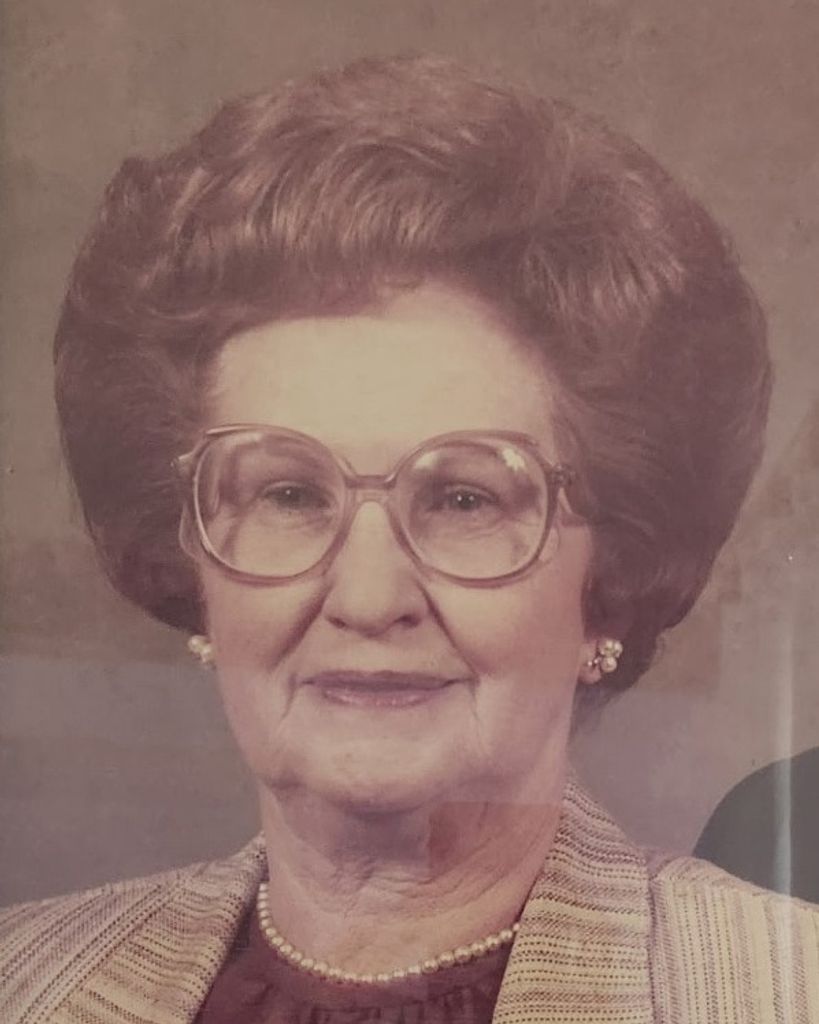
When we hear the news of the Flora Belle Guthrie death 105 Wakita, OK, it immediately forces us to pause and reflect on the sheer magnitude of a century lived well. Reaching the age of 105 is an incredibly rare and monumental milestone. It is an achievement that transcends simple biology and enters the realm of profound historical significance. Flora Belle Guthrie was not just a resident of a small town in Oklahoma; she was a living, breathing archive of American history. From her birth in 1921 to her peaceful passing on August 6, 2026, her life encapsulated the roaring twenties, the despair of the Great Depression, the mobilization of World War II, the rise of the internet, and a global pandemic.
But beyond the impressive timeline of her life, the story of Flora Belle Guthrie offers us a unique lens through which we can examine the very concept of legacy. In our modern, hyper-connected world, we are too often obsessed with the loudest voices in the room. We look at viral stars, controversial politicians, and scandal-ridden celebrities, mistakenly equating their fleeting fame with lasting importance. The life of Flora Belle Guthrie proves the exact opposite. Her journey shows us that true, indestructible impact is usually built quietly, through decades of steadfast, unglamorous dedication to family, church, and community.
In this exhaustive exploration of the Flora Belle Guthrie death 105 Wakita, OK, we are going to dive incredibly deep into every single facet of what a life like hers means to society today. We’ll explore her personal biography alongside the rich, complex history of Wakita, Oklahoma. We will examine the science and shifting demographics behind the rise of centenarians. Furthermore, we’ll delve into the complex legal philosophies surrounding estate planning and elder law for those who manage to outlive an entire century. Finally, we will draw a stark, necessary contrast between a life built on quiet community service and the tumultuous, legally fraught downfalls of modern public figures. This isn’t just an obituary; it’s a masterclass in living, planning, and leaving a legacy that genuinely stands the test of time.
The Remarkable Life of Flora Belle Guthrie: A Wakita Pillar
Early Years: Sand Creek, the Great Depression, and the Dust Bowl
Flora Belle (Ransom) Guthrie was born on July 7, 1921, in Sand Creek, Oklahoma. She was the oldest of seven children born to John and Lucinda Belle (Ayres) Ransom. To truly understand the gravity of being born in 1921 in rural Oklahoma, you have to mentally step into the historical backdrop of that era. The 1920s in the United States were a time of rapid industrial change, but for rural farming communities on the plains, it was also the calm before an unprecedented, devastating storm.
As the oldest of seven children, Flora Belle would have naturally and immediately taken on a heavy leadership role in her household. She helped care for her younger siblings—Clifton, Gary, Donna, Orma, John, and Jean—learning the foundational values of responsibility, patience, and sacrifice almost from the moment she could walk. When the stock market crashed in 1929, ushering in the Great Depression, Flora Belle was just eight years old. Shortly after, the devastating ecological disaster known as the Dust Bowl ravaged the plains of Oklahoma, turning day into night with choking dirt.
Growing up during the Dust Bowl in Grant County meant enduring suffocating dust storms that blotted out the sun, destroyed vital cash crops, and forced thousands of desperate Oklahomans to migrate westward toward California. Yet, the Ransom family stayed. They endured the unendurable. Flora Belle graduated from Wakita High School with the Class of 1939, a powerful testament to her resilience. The resilience forged in those harsh, unforgiving early years undoubtedly shaped the stoic, hardworking, and deeply compassionate woman she would become. It was quite literally a baptism by dust and fire that prepared her for a century of life’s inevitable ups and downs.
Marriage, Family, and Deep Roots in Oklahoma Soil
On May 23, 1940, shortly after her high school graduation and just as the terrifying winds of World War II were beginning to howl across the globe, Flora Belle united in marriage with Howard William Guthrie. Their marriage was a partnership in the truest, most traditional sense of the word, lasting an incredible 55 years until Howard’s passing on July 21, 1995.
Together, Flora Belle and Howard built a life deeply rooted in the Oklahoma soil. They welcomed four beloved children into their lives: John Howard, Judy Ann, Danny Wayne, and Steven Lee. Raising four children in the mid-20th century in rural America was no small feat. It required immense patience, strict frugality, and an unwavering commitment to family values. Because of her extreme longevity, Flora Belle tragically outlived three of her children—Dan, John, and Judy. No parent ever expects to bury their children, let alone three of them. Enduring such profound, repeated loss requires a well of spiritual and emotional strength that very few human beings possess.
Despite these heartbreaking tragedies, Flora Belle’s family tree continued to bloom vigorously. She became the adored matriarch of a sprawling, deeply connected family that includes five grandchildren, sixteen great-grandchildren, and six great-great-grandchildren. She was a living, breathing bridge connecting five distinct generations, uniquely able to impart wisdom gained from the 1920s to children born in the 2020s.
Career, Faith, and Lifelong Civic Engagement
Flora Belle wasn’t just a mother and a wife; she was a pioneering professional in her tight-knit community. For many years, she worked as a bookkeeper for the Farmers Cooperative Elevator Company. If you aren’t familiar with agricultural communities like Wakita, you must understand that the local co-op elevator is the beating heart of the town’s economy. It’s where farmers bring their hard-earned harvests, where grain is stored and sold globally, and where the financial stability of the entire town is maintained. As a bookkeeper, Flora Belle was entrusted with the economic lifeblood of her neighbors. Her sharp mind, honesty, and meticulous attention to detail made her an invaluable asset to the cooperative until her well-deserved retirement.
Beyond her career, Flora Belle’s life was fiercely anchored by her profound religious faith. She gave her life to the Lord as a young lady, being baptized in the Sand Creek Methodist Church. Later, alongside her husband and growing children, she became an active, devoted member of the Wakita Christian Church. She didn’t just attend Sunday services passively; she rolled up her sleeves and served her congregation. She was a treasurer and a deaconess for many years, managing church finances with the exact same integrity she brought to the Farmers Cooperative.
Her civic engagement was equally impressive and continuous. Flora Belle was a past Matron of the Eastern Star, highly active in CWC and Crown, a lifetime member of Sorority, and a deeply dedicated participant in Wakita Senior Citizens. She loved to play bridge, crochet intricate patterns, and read extensively. These activities might seem quaint or simple to a modern outsider, but they are the very threads that weave a community together. Through bridge clubs, sororities, and the Eastern Star, Flora Belle fostered deep, lifelong friendships and provided a quiet, steadying leadership that kept the town of Wakita vibrant.
Wakita, Oklahoma: The Historical Context Shaping a 105-Year Life
From the Cherokee Strip to Modern Agriculture
To fully appreciate the weight of the Flora Belle Guthrie death 105 Wakita, OK, you have to understand Wakita itself. Located in Grant County, Oklahoma, Wakita sits just a few miles south of the Kansas border. The town’s entire history is inextricably linked to the famous Cherokee Strip Land Run of 1893. When the federal government suddenly opened the Cherokee Outlet to non-Indigenous settlement, tens of thousands of desperate, ambitious people raced on horseback and in wagons to claim 160-acre plots of land.
Wakita was literally born out of this chaotic, frantic dash for opportunity. The early settlers who built the town had to possess an iron will. They built crude homes from prairie sod, survived extreme tornadic weather, and carved a functional agricultural economy out of the wild prairie. Flora Belle was born less than thirty years after this famous land run. The people who founded Wakita were her parents’ exact generation. She grew up completely surrounded by the raw, pioneering spirit of people who had staked their claim on the frontier.
Over the incredibly long course of her 105 years, Flora Belle watched Wakita transform from a bustling post-frontier agricultural hub into a modern, quiet rural community. She saw the transition from horse-drawn plows to massive, air-conditioned, GPS-guided combine harvesters. Wakita even gained brief global fame in 1996 when it was used as a primary filming location for the blockbuster Hollywood movie Twister. While the glitz of Hollywood came and went, destroying fake houses for the silver screen and leaving town, the real residents like Flora Belle remained, anchoring the town with their steady, everyday resilience.
Small-Town Values and the Fabric of America
Small towns like Wakita are routinely overlooked in the grand, sweeping narrative of American history, yet they are the very fabric that holds the nation together. In a small town, anonymity is completely impossible. Your reputation is your absolute most valuable currency. If you are dishonest in business, the whole town knows by noon. If you are generous to a neighbor in need, the whole town remembers for decades.
Flora Belle Guthrie thrived in this transparent environment for over a century because she flawlessly embodied the absolute best of small-town values. She was incredibly reliable, strictly honest, and dedicated to the collective good of her neighbors. The fact that the memorials in her honor are directed to the Community Health Center in nearby Anthony, Kansas, speaks volumes about her character. It shows a continuous, lifelong commitment to supporting the essential local institutions that care for the rural population. In honoring her passing, we are also forced to honor the rural communities that systematically produce such remarkably steadfast, dependable individuals.
The Phenomenon of the Centenarian: Health, Longevity, and Community
Biological Resilience and Rural Lifestyle Factors
Living to 105 is an absolute biological marvel. While life expectancy in the United States currently hovers around 77 years, super-agers like Flora Belle Guthrie push the absolute boundaries of human longevity. So, how does someone successfully reach 105 with their dignity and community intact?
Scientists and researchers who study “Blue Zones”—specific regions of the world with exceptionally high numbers of centenarians—have identified several common denominators. These include a plant-leaning diet, constant natural physical movement, a strong sense of purpose, effective stress management, and incredibly deep social connections. While Wakita, Oklahoma, may not be an official, globally recognized Blue Zone, Flora Belle’s life checks almost every single box on the longevity list.
First, consider the rural lifestyle of the early 20th century. Growing up on a farm and working in an agricultural community required constant, grueling physical activity. There were no sedentary desk jobs, no binge-watching television; survival required daily movement. Second, consider her diet. For most of her life, food was likely grown locally, eaten seasonally, and prepared entirely from scratch without the ultra-processed, chemical-laden additives so prevalent today.
But perhaps the most critical factor is the psycho-social element. Flora Belle was completely surrounded by a massive family and was deeply embedded in her church and local civic organizations. She had an unwavering, daily sense of purpose. Whether she was flawlessly balancing the books at the co-op, serving as a church deaconess, or playing competitive bridge with her sorority sisters, she was constantly engaging her mind and connecting with others. Modern medical science tells us that severe loneliness is as deadly to the human body as smoking fifteen cigarettes a day. Flora Belle’s hyper-connected, socially rich life in Wakita was a powerful, invisible shield against cognitive decline and physical frailty.
The Shift in Centenarian Demographics Nationwide
The news of the Flora Belle Guthrie death 105 Wakita, OK, occurs at a time when the demographics of aging in America are shifting dramatically. Back in 1990, there were approximately 37,000 centenarians in the United States. Today, that number has surged past 90,000, and it is confidently projected to reach over 130,000 by the end of the decade.
This massive demographic boom presents both incredible opportunities and profound structural challenges for our society. Medical advancements in cardiology, oncology, and infectious disease management are keeping people alive much longer than nature originally intended. However, the American healthcare system is notoriously ill-equipped to handle extreme longevity. Long-term care is prohibitively expensive, and rural hospitals are closing at alarming, dangerous rates. The fact that Flora Belle passed away peacefully at the Community Health Center—just one month after her 105th birthday—highlights the absolutely vital necessity of robust rural health infrastructure. It is a glaring reminder that as our population ages, we must invest heavily in local clinics and nursing facilities to ensure our elders can age with dignity in the rural communities they spent their lives building.
Legal Philosophy: Estate Planning, Elder Law, and Securing a Century of Wealth
Navigating Wills, Revocable Trusts, and Probate Court
When someone manages to live to be 105, the legal administration of their long life becomes an intricate, highly fascinating puzzle. The legal philosophy surrounding estate planning for centenarians goes far, far beyond simply writing a basic will on a piece of paper. It involves actively protecting assets over decades of severe economic fluctuation, mitigating heavy tax liabilities, and ensuring that wealth transfers smoothly across multiple, overlapping generations.
Let’s dive deep into the legal mechanisms that secure a century of accumulated assets. For someone in Flora Belle’s exact position—survived by children, grandchildren, great-grandchildren, and great-great-grandchildren—a standard Last Will and Testament is often legally insufficient. A basic Will guarantees that an estate will have to go through a county probate court. Probate is highly public, notoriously time-consuming, and drains the estate through expensive legal fees.
Instead, modern elder law philosophy heavily favors the use of a Revocable Living Trust. By placing property, bank accounts, and investments into a trust, a centenarian maintains total, unrestricted control of their assets during their lifetime. Upon their death, the trust immediately and entirely privately transfers those assets to the designated beneficiaries, bypassing the slow probate system entirely. Furthermore, trusts can be strategically designed with generational skipping provisions. If a centenarian outlives their own children—as Flora Belle tragically did with three of hers—the trust can seamlessly redistribute assets directly to the grandchildren or great-grandchildren without triggering massive, wealth-destroying tax penalties.
The Rising Costs of Elder Care and Medicaid Complexities
One of the absolute most complex and frightening areas of elder law is navigating the astronomical, rising costs of long-term care in America. Standard Medicare does not pay for long-term custodial nursing home care. Medicaid does, but only if the individual has essentially impoverished themselves down to their last couple of thousand dollars. For someone living to 105, completely outliving one’s retirement savings is a very real, very terrifying possibility.
This is exactly where the advanced legal strategy of Irrevocable Trusts and the Medicaid “Look-Back” period comes into play. Proactive estate planners often advise their clients in their 70s or 80s to place their most valuable assets (like a family farm or a primary residence) into an Irrevocable Medicaid Asset Protection Trust. Once the strict five-year look-back period expires, those assets are legally invisible to Medicaid evaluators. The state cannot legally force the sale of the family farm to pay for the nursing home bill. The individual can receive necessary government-funded care while safely preserving their century’s worth of hard-earned legacy for their descendants.
Essential Legal Instruments: Power of Attorney and Healthcare Proxies
Living a very long time inevitably brings periods of physical or cognitive decline. The legal philosophy of bodily autonomy dictates that every single individual has the absolute right to control their own destiny. To preserve this autonomy when the mind or body eventually fails, vital legal instruments must be put in place early.
A Durable Financial Power of Attorney allows a trusted, legally bound individual (like Flora Belle’s surviving son, Steve) to manage bank accounts, pay bills, and make necessary financial decisions when the centenarian no longer can. Without this critical document, families are forced into a lengthy, highly expensive guardianship battle in a public court.
Equally critical is the Advance Healthcare Directive, or Healthcare Proxy. This powerful legal document outlines an individual’s strict wishes regarding end-of-life care. Does a 105-year-old want to be placed on a ventilator? Do they want artificial hydration and nutrition if they fall into a coma? By clearly, legally defining these wishes in binding documents, centenarians spare their grieving families the agonizing, guilt-ridden burden of making life-or-death decisions in a time of extreme emotional distress.
Contrast in Legacies: The Public Spectacle vs. The Quiet Life
Why the Cases of Harvey Weinstein and Rudy Giuliani Matter Here
At first glance, it might seem utterly bizarre, if not entirely inappropriate, to mention the names of highly disgraced public figures like Harvey Weinstein or Rudy Giuliani in an article honoring a sweet, 105-year-old woman from Wakita, Oklahoma. However, if we are to truly, deeply explore the legal and moral philosophy of “legacy,” we absolutely must examine its extremes. We must compare the quiet, totally indestructible legacy of Flora Belle Guthrie with the spectacular, legally dismantled legacies of those who sought the limelight at all costs.
Consider Harvey Weinstein. Here was a man who possessed immense, unfathomable wealth, global fame, and unparalleled power in the media industry. For decades, he was treated as untouchable Hollywood royalty. Yet, his so-called legacy was built on a rotten foundation of abuse, coercion, and moral bankruptcy. When the legal system finally caught up with him, his legacy was completely annihilated overnight. He went from winning Oscars to sitting in a damp prison cell, facing a barrage of civil lawsuits that systematically stripped him of his wealth and his dignity.
Similarly, look closely at Rudy Giuliani. Once heralded globally as “America’s Mayor” following the tragic events of 9/11, Giuliani held a legacy that most politicians could only dream of achieving. Yet, driven by extreme hubris and a desperate cling to political relevance, he engaged in actions that led to devastating defamation lawsuits, disbarment proceedings, and federal indictments. His legacy is currently being humiliatingly liquidated in bankruptcy courts.
Now, starkly contrast these public, legal spectacles with the legacy of Flora Belle Guthrie. Flora Belle never walked a red carpet. She never held a press conference. She never amassed billions of dollars in a hedge fund. But what she built is completely, unequivocally bulletproof. No civil lawsuit can ever take away the countless hours she spent balancing the books at the local co-op. No bankruptcy court can ever liquidate the love she poured into her five generations of descendants. No criminal indictment can tarnish the fact that she was a faithful deaconess and a pillar of the Eastern Star.
The Legal Philosophy of Reputation and Historical Memory
The modern legal system views a person’s reputation as a highly tangible asset. In tort law, you can sue someone for defamation if they damage your reputation, because the law explicitly recognizes that a good name has massive financial and social value. But the law can only protect a reputation that is fundamentally sound to begin with. The legal philosophy of historical memory tells us that truth always, eventually, bubbles to the surface.
Weinstein and Giuliani tried fruitlessly to use high-priced lawyers, non-disclosure agreements (NDAs), and intimidation tactics to forcefully protect their legacies. It failed spectacularly because the underlying truth of their actions was fundamentally corrupt. Flora Belle Guthrie needed no NDAs, no high-priced crisis PR firms, and no legal fixers. Her flawless reputation was secured by the daily, unglamorous, highly consistent actions of a life lived with unwavering integrity. The contrast proves a universal, undeniable truth: public fame is incredibly fragile, but personal character is absolutely indestructible. True legacy is not what the media says about you; it is how your local community remembers you.
The Intersection of Media Presence and Personal Legacy
The Evolution of the Obituary and Digital Footprints
The way we report and consume the news of a passing has changed drastically over the course of Flora Belle’s 105 years. When she was born in 1921, obituaries were strictly print affairs. They were short, highly localized notices in the back of the town newspaper. The physical paper was read over breakfast, clipped out with scissors, tucked away safely into a family Bible, and eventually forgotten by the broader world.
Today, the Flora Belle Guthrie death 105 Wakita, OK, is broadcast instantly across the globe. Digital platforms like Legacy.com and local news sites like the Enid News & Eagle automatically aggregate death notices, creating a permanent, highly searchable digital footprint. The humble obituary has evolved from a local, temporary notification into a global, permanent memorial space.
This rapid digital evolution fundamentally changes the nature of mourning. Fifty years ago, if you missed the funeral service in Wakita, you simply missed it. Today, a great-grandchild living in Tokyo or a former neighbor living in London can easily log onto a memorial page, read all about Flora Belle’s remarkable life, light a virtual candle, and leave a heartfelt message on her digital guestbook. It democratizes grief and allows the legacy of a small-town woman to easily transcend all geographical boundaries.
Privacy, Data, and Online Memorials in the 21st Century
However, this rapid transition into digital memorials brings up highly complex issues of data privacy and the troubling commodification of human grief. The platforms that host these obituaries are often massive, for-profit tech companies. They generate substantial revenue through running targeted advertisements alongside obituaries, selling virtual flowers, and quietly capturing user data from those who sign the guestbooks.
There is a growing, fierce legal and ethical debate about who exactly “owns” the digital footprint of the deceased. When Flora Belle passed away, her biographical details, family names, and dates were instantly uploaded to multiple aggregate sites. While this generously allows for widespread condolences, it also inherently means her legacy is tied forever to the terms and conditions of tech conglomerates.
For modern estate planners, managing a digital footprint is quickly becoming just as important as managing financial assets in a bank. Families must now strongly consider who has the legal passwords to social media accounts, how to cleanly shut down digital subscriptions, and how to protect the deceased from identity theft—a vicious crime that tragically spikes right after public obituaries are posted online. Ensuring that a person’s digital legacy is handled with the exact same respect as their physical remains is the absolute new frontier of post-mortem legal philosophy.
Community Impact: The Ripple Effect of Flora Belle’s Dedication
Civic Duty Through the Eastern Star and Senior Citizens Initiatives
Let us zoom back in on the highly specific community impact of Flora Belle’s life. Being highly active in the Order of the Eastern Star is not just about attending monthly meetings in a lodge; it is about engaging in deep, sustained, grassroots charity work. The Eastern Star focuses heavily on the moral principles of truth, charity, and loving-kindness. Through this organization, Flora Belle would have been deeply involved in raising crucial funds for local high school scholarships, supporting neighbors who were in dire financial distress, and acting as a steady moral compass for the younger generations growing up in Wakita.
Her long-term involvement in the Wakita Senior Citizens group is particularly poignant. She wasn’t just a casual participant; as she aged into her 90s and well past 100, she became a living, breathing symbol of what a senior citizen can truly be. She aggressively challenged the modern stereotype that extreme old age is merely a sad time of decline and isolation. By continuing to play bridge, crochet, and socialize heavily, she demonstrated that elderhood can be a vibrant, intellectually engaging, and deeply joyful phase of life. She provided a clear, undeniable roadmap for her peers on exactly how to age with grace, humor, and unmatched dignity.
Lessons Learned from 105 Years of Steadfast Living
What can the modern, fast-paced, highly anxiety-ridden world realistically learn from the Flora Belle Guthrie death 105 Wakita, OK? The lessons are profound, multi-layered, and deeply necessary for our times.
First, we learn the immense value of staying put. In a modern culture that constantly preaches the desperate need to move, to hustle, to relocate constantly for the next big financial opportunity, Flora Belle showed the immense, quiet power of growing exactly where you are planted. By dedicating her entire century to Grant County, she built interpersonal relationships that had unparalleled, unbreakable depth.
Second, we learn the critical importance of analog hobbies. In a world hopelessly addicted to doom-scrolling on glowing smartphones, Flora Belle played bridge. Bridge requires deep concentration, complex strategy, and face-to-face social interaction. She crocheted, creating tangible, beautiful, warm items with her own hands. These analog activities physically ground us in reality, naturally lower our cortisol levels, and keep our brains incredibly sharp into old age.
Third, we learn that profound grief is simply the necessary price we pay for a very long life. To live to 105 guarantees that you will bury your parents, your beloved siblings, your life partner, and perhaps even your own children. Flora Belle’s incredible ability to survive these catastrophic emotional blows without losing her deep faith or her everyday joy is perhaps her single greatest achievement. It teaches us all that human beings are incredibly, shockingly resilient, fully capable of holding immense sorrow and profound gratitude simultaneously in the same heart.
Final Arrangements and Honoring Her Memory
As the tight-knit community of Wakita prepares to finally say goodbye to their oldest resident, the arrangements beautifully reflect the simplicity, faith, and dignity of Flora Belle’s long life. A solemn graveside service will be held at 10:30 a.m. on Monday, August 10, 2026, at the Wakita Cemetery in Wakita, Oklahoma. Pastor Jeff Enabnit will thoughtfully officiate the service, offering prayers and reflections on a life that remarkably spanned an entire century.
Graveside services in rural Oklahoma carry a very specific, deeply rooted kind of poignancy. There are no massive, echoing cathedrals or ornate, expensive mausoleums. There is just the vast, open Oklahoma sky, the sweeping prairie winds, and a community gathered closely around the earth to respectfully return one of their absolute best to the soil she loved so much.
In lieu of extravagant, fading floral displays, the family has wisely requested that memorials in memory of Flora Belle be made directly payable to the Community Health Center. Donations can be securely sent in care of Prairie Rose Funeral Home, 602 E. Main St., Anthony, KS 67003. This final, generous request is the ultimate testament to exactly who Flora Belle Guthrie was. Even in death, she is redirecting attention and vital financial resources to the health and well-being of her neighbors. She is ensuring that the rural medical infrastructure that cared for her so well will be there to care for the next generation.
Frequently Asked Questions (FAQ) About Flora Belle Guthrie and Centenarian Planning
How old was Flora Belle Guthrie when she passed away? Flora Belle Guthrie passed away on August 6, 2026, exactly one month after joyfully celebrating her 105th birthday. She was born on July 7, 1921.
Where did Flora Belle Guthrie live her life? She was born in Sand Creek, Oklahoma, and spent her entire, century-long life deeply embedded in the rural agricultural community of Wakita, Oklahoma.
What did Flora Belle Guthrie do for a living? For many years, she worked as a highly respected, meticulous bookkeeper for the Farmers Cooperative Elevator Company in Wakita, helping to expertly manage the local agricultural economy.
What is the historical significance of Wakita, OK? Wakita was founded shortly after the famous Cherokee Strip Land Run of 1893. It is a quintessential rural agricultural town and famously served as the primary filming location for the 1996 blockbuster film Twister.
Why is estate planning so absolutely crucial for someone living past 100? As individuals live past 100, the risk of entirely outliving their financial assets increases exponentially due to the incredibly high cost of elder care. Legal instruments like Revocable and Irrevocable Trusts, Durable Powers of Attorney, and Healthcare Proxies are incredibly vital to protect the individual’s legacy and ensure they receive necessary care without fully bankrupting the family estate.
How does a quiet, community-based legacy compare to high-profile public legacies? While highly public figures (like Harvey Weinstein or Rudy Giuliani) often rely completely on fame, media spin, and aggressive legal defense to protect their legacies—which can easily crumble under scandal—a quiet, community-based legacy like Flora Belle’s is built on decades of localized integrity, civic duty, and genuine human connection. This makes a community-based legacy virtually indestructible and legally sound.
Where can memorials or donations be sent to honor her? The family has generously requested that memorials be made directly to the Community Health Center. Donations can be mailed safely in care of Prairie Rose Funeral Home, 602 E. Main St., Anthony, KS 67003.
What specific organizations was Flora Belle involved in? She was profoundly engaged in her local community, serving as a treasurer and deaconess for the Wakita Christian Church. She was also a past Matron of the Order of the Eastern Star, highly active in CWC and Crown, a lifetime member of Sorority, and a beloved fixture in the Wakita Senior Citizens group.
How does living in a rural area positively affect extreme longevity? While rural areas often face frustrating healthcare access challenges, the tight-knit social structures, requirement for daily physical activity, and incredibly deep sense of purpose found in towns like Wakita closely mirror the exact longevity factors found in the world’s famous “Blue Zones,” heavily contributing to extended lifespans for dedicated individuals like Flora Belle.
In closing, the story of Flora Belle Guthrie is a masterclass in living deeply, loving fully, and planning wisely. It is a stark, necessary reminder that while the history books are filled with the names of generals, politicians, and chaotic celebrities, it is the quiet, steadfast men and women of small towns like Wakita, Oklahoma, who truly carry the world forward. Her 105 years on this earth are a brilliant testament to faith, endurance, and the unyielding power of community love.