Martha Rivers Ingram Dies at 90: Business Leader and Arts Philanthropist
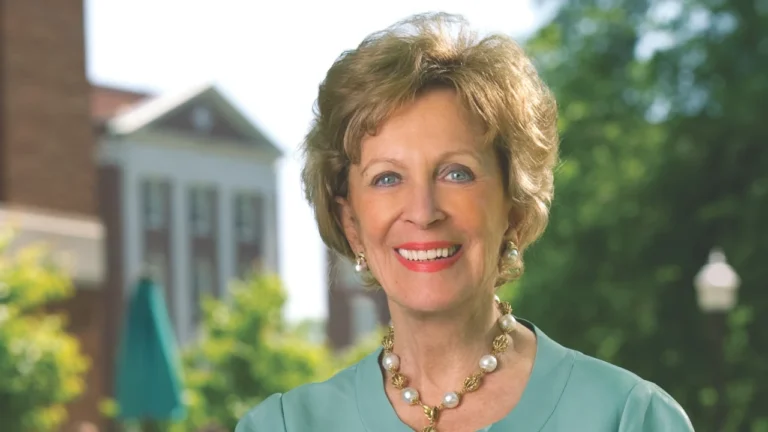
Martha Rivers Ingram: Remembering a Business Pioneer and Arts Patron
Martha Robinson Rivers Ingram, an influential American billionaire executive, patron of the arts, and dedicated civic leader, passed away on August 6, 2026, at the age of 90. Her death leaves behind a towering legacy across business, education, and cultural institutions, grieving family members, close friends, and the numerous communities that benefited from her guidance and generosity.
Early Life, Education, and Career Beginnings
Born in Charleston, South Carolina, in 1935, Martha grew up in the Lowcountry before completing her early schooling at Ashley Hall. She went on to attend Vassar College, earning a degree in history in 1957. During the initial stage of her career, she worked alongside her father at WCSC radio and television stations, where her duties notably included working as a classical music disc jockey. In 1958, she married E. Bronson Ingram, and three years later, in 1961, the couple relocated to Nashville.
Leadership at Ingram Industries and Corporate Achievements
Following the death of her husband in 1995, Martha took over as chairman and chief executive officer of Ingram Industries, an enterprise that ranks among the largest privately held corporations in the United States. Under her stewardship, the organization continued to flourish, solidifying her standing as a deeply respected corporate leader. In addition to guiding Ingram Industries, she lent her governance experience to several major corporate boards, serving as a director for:
- Baxter International
- Ingram Micro
- Regions Financial Corporation
- Weyerhaeuser Company
A Lasting Impact on the Arts
Beyond her commercial success, Martha earned the affectionate title of Nashville’s “First Lady of the Arts.” She was a driving force behind the creation of key cultural facilities and institutions, including the Tennessee Performing Arts Center, the Tennessee Repertory Theatre, and the Schermerhorn Symphony Center. Her cultural influence extended back to her hometown of Charleston as well, where she was instrumental in bringing the Gaillard Center to fruition. Furthermore, her patronship included serving on the boards of directors for the Nashville Ballet, the Nashville Opera, the Nashville Symphony, and the Frist Center for the Visual Arts.
Educational Governance and Civic Engagement
Martha was equally devoted to advancing higher education and local communities. In 1995, she was elected to the Vanderbilt University Board of Trust, ultimately serving as its chair from 1999 until 2011. Her passion for academic stewardship led her to serve as a trustee for Vassar College, Ashley Hall, and Harpeth Hall School. On the civic front, her expertise was sought for public leadership roles, including appointments to the Tennessee Bicentennial Commission and the President’s Advisory Committee on the Arts for the Kennedy Center.
Honors, Personal Interests, and Family Legacy
Over the course of her lifetime, Martha received widespread recognition for her philanthropic endeavors and leadership. Among her notable accolades were her induction into the Music City Walk of Fame, the Gold Medal in the Arts Award, and South Carolina’s highest civilian honor, the Order of the Palmetto. Permanent monuments to her vision remain in place today.