Chris Vincent Snowmobile Obituary–Racing Legend
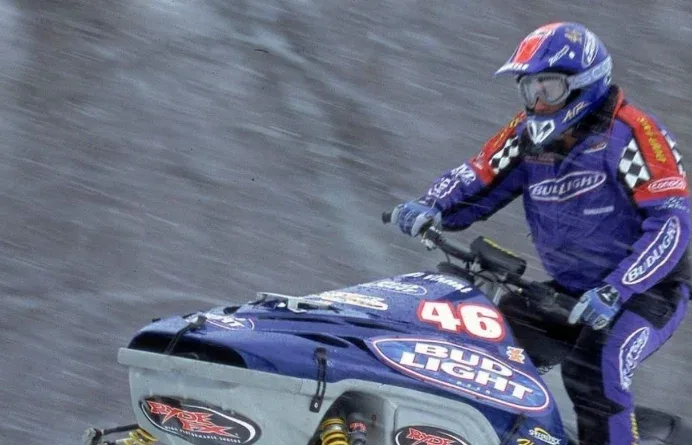
The winter wind carries a different kind of chill today for anyone who has ever loved the smell of two-stroke exhaust and the roar of engines on a frozen track. The snowmobile racing community is collectively reeling from the heartbreaking news of a monumental loss. This Chris Vincent snowmobile obituary–racing legend tribute is not just about reporting a tragic passing; it is about celebrating the life, the grit, and the unyielding passion of a man who fundamentally altered the trajectory of professional snocross. On August 5, 2026, the world learned that Chris Vincent, the iconic, fierce, and legendary rider of the #46 machine, passed away in a tragic accident.
When you hear the name Chris Vincent, you do not just think of a guy who rode snowmobiles. You think of a gladiator. You think of a man who approached every single berm, double-jump, and straightaway as if his life depended on conquering it. He was a pioneer during the golden era of snocross in the 1990s and early 2000s, a time when the sport was transitioning from niche winter entertainment into a massive, globally televised extreme sport. Chris was right at the center of that explosion, pushing the limits of what a snowmobile—and a human body—could physically endure. We are going to dive incredibly deep into his history, his machines, his rivalries, and the complex realities of media, legacy, and legal philosophy in the modern era of public figures. Buckle up, because the story of Chris Vincent is one wild, high-flying ride.
The Shocking Loss of a Snocross Titan
When the news broke across social media and racing forums that Chris Vincent had died, time seemingly stopped for a massive segment of the motorsports world. The sheer suddenness of the tragic accident left friends, family, and fans struggling to comprehend how someone so vibrant, so indestructible on the track, could be taken so soon. In the hours following the announcement, tributes poured in from every corner of the globe. From factory race directors in Minnesota to grassroots riders in Vermont, the stories began to flow.
For those who dedicate their lives to snocross, it is never just a weekend hobby. It is a grueling, all-consuming way of life. It demands unparalleled physical conditioning, razor-sharp mental focus, and an absolute lack of fear. Chris possessed all of these traits in spades. His passing is not just the loss of a former champion; it is the loss of a foundational pillar of the sport. We often think of our extreme sports heroes as invincible. We watch them launch 400-pound machines fifty feet into the air, land on sheets of solid ice, and battle through zero-degree weather, and we elevate them to superhuman status. But the tragic reality of Chris’s death brings us violently back to earth, reminding us of the fragile nature of life.
The outpouring of grief has been nothing short of staggering. Mechanics who wrenched on his Yamaha and Ski-Doo sleds in the dead of night, fellow racers who traded paint with him on the Amsoil circuit, and fans who stood in the freezing cold just to catch a glimpse of the famous #46 have all stepped forward to pay their respects. They are sharing memories of a man who, despite his ferocious on-track persona, always had time to sign an autograph for a shivering kid in the pit lane. He was a complex, beautiful, driven human being, and the hole he leaves in the snowmobiling community is massive.
The Early Days: Forging Steel in the Rock Maple Circuit
To truly understand the Chris Vincent snowmobile obituary–racing legend narrative, we have to go back to the beginning. Before the ESPN cameras, before the massive factory sponsorships, and before the X Games gold medals, there was a young, incredibly aggressive kid tearing up the local circuits. Chris hails from a time when snocross was still finding its identity. He cut his teeth on the Rock Maple Racing Circuit in New England, a grueling, deeply competitive grassroots racing series that separated the pretenders from the contenders.
In the early 1990s, the Rock Maple circuit was legendary for its tight, unforgiving tracks. You did not just need speed to win there; you needed elbows. You needed the ability to muscle a heavy, unruly snowmobile through icy corners while three other guys were trying to run you off the track. Chris Vincent thrived in this environment. He quickly made a name for himself by dominating the Pro classes. He was not just beating people; he was breaking their will to compete. His riding style was raw, untamed, and deeply visceral. When he was on the track, it looked as though he was wrestling the snowmobile into submission rather than merely driving it.
It was during these formative years that Chris developed his legendary toughness. In extreme sports, injuries are not a possibility; they are a guarantee. Chris suffered his fair share of broken bones, torn ligaments, and concussions, but he never let it stop him. If he crashed in a heat race, he would be back on the starting line for the Last Chance Qualifier, his sled taped together, his body aching, and his eyes burning with absolute determination. This refusal to quit is what initially caught the eye of the major factory teams. They saw a kid from Vermont who possessed a rare combination of raw talent and unteachable grit. They knew that if they could put him on top-tier equipment, he would set the snowmobile world on fire.
The Factory Years: Arctic Cat, Yamaha, and Ski-Doo Evolutions
The professional trajectory of Chris Vincent is inextricably linked to the technological evolution of the snowmobile industry itself. He was one of the rare riders who managed to make a massive impact across multiple factory brands, each era defining a different chapter of his legacy.
His early national prominence came aboard Team Arctic. In the mid-1990s, Arctic Cat was putting out some of the most aggressive, nimble sleds on the snow. Chris, with his wild, hang-it-all-out riding style, was a perfect match for the green machines. Fans distinctly remember his performances at iconic venues like West Yellowstone in 1996. Even when he didn’t win, he was the star of the show. There are legendary stories of Chris crashing early in a race, falling half a lap behind the leaders, and instead of pulling off the track, pinning the throttle to the handlebars and riding with absolute disregard for self-preservation to catch up. He would gobble up ground at a terrifying pace, bringing the entire crowd to its feet. He raced on pure emotion, a trait that endeared him to the masses.
But Chris was not one to stay stagnant. In a move that shocked the industry, he transitioned to Yamaha, helping them develop their snocross program. At the time, Yamaha was known for their incredibly fast, high-performance engines, but they were struggling to find the right chassis setup for the massive, bone-jarring jumps of modern snocross. Chris brought his extensive knowledge and fearless testing capabilities to the team. Under the banner of operations like Hauck Power Sports, Chris pushed the Yamaha equipment to its absolute limits. He was instrumental in providing the feedback necessary to refine the suspension geometries and power delivery systems that would eventually pave the way for Yamaha’s future innovations, including the revolutionary four-stroke RX-1 era.
Eventually, Chris found his way to the Amsoil/Ski-Doo team, specifically riding the iconic Scheuring Speed Sports #46 Ski-Doo. It was here that he truly cemented his legacy as a global superstar. The Ski-Doo REV chassis revolution was on the horizon, but even before that, Chris was taking standard trailing-arm sleds and making them do things engineers swore were impossible. The black and yellow #46 became a symbol of raw speed and unapologetic aggression. His time on Ski-Doo perfectly coincided with the explosion of televised extreme sports, putting Chris squarely in the living rooms of millions of fans worldwide.
The 1999 Winter X Games: A Golden Legacy at Crested Butte
If you want to isolate the singular moment that defines the Chris Vincent snowmobile obituary–racing legend keyword, you have to travel back to 1999. Crested Butte, Colorado. The Winter X Games. This was the moment snocross truly arrived on the mainstream stage, and Chris Vincent was the leading man in the most bizarre, spectacular finish in motorsports history.
The field was absolutely stacked. Thirty-two of the greatest racers on the planet, including future hall-of-famers like Blair Morgan, Toni Haikonen, and Dennis Eckstrom, were invited to compete. Chris, piloting his black No. 46 Scheuring Speed Sports Ski-Doo, had to fight his way through incredibly tough heats just to make the final. The tension in the thin mountain air was palpable. Snocross tracks at the X Games were built differently—massive triples, huge rhythm sections, and terrifying whoops that demanded absolute perfection.
When the green flag dropped for the final, Chris Vincent rode like a man possessed. He navigated the chaotic first corner, found his lines, and began setting a blistering pace. Throughout the race, the pressure was immense. Blair Morgan, the smooth, calculating, stand-up riding prodigy, was breathing down his neck. But Chris would not be denied. He held his lines, blocked the inside corners, and soared over the massive jumps with pinpoint precision.
Then came the finish line. In a moment of pure, unadulterated adrenaline, as Chris crossed the line to secure the gold medal, he decided to throw a celebratory heel-clicker. But exhaustion and the sheer weight of the machine betrayed him. Instead of a triumphant trick, he threw his feet up, missed the running boards on the landing, and slammed violently onto his back on the icy landing ramp. The gold medalist was instantly laid out flat on the track.
What followed is etched into the memories of every fan watching. Blair Morgan, coming over the finish line jump right behind him, saw Chris lying on the track. In a split-second decision, Morgan threw a sketchy, desperate “Superman” maneuver to alter his flight path and avoid landing on the stunned Vincent. Morgan landed, immediately ditched his sled, and sprinted back up the hill to check on his fierce rival. It was a chaotic, beautiful, terrifying display of the danger and the deep camaraderie of the sport. Chris walked away with the gold medal, and the legend of the #46 was forever immortalized.
The “Bad Boy” Persona and the Psychology of Extreme Racing
Every great sport needs a villain, or at the very least, an anti-hero. In the world of snocross, Chris Vincent wore the “bad boy” badge with absolute pride. He was the Dale Earnhardt of the snow—square-shouldered, bold, and entirely unapologetic. If you were in his way, he was going to move you.
This persona was not an act; it was a deeply ingrained psychological survival mechanism. Snocross is not a gentleman’s sport. When you are rocketing into a 180-degree hairpin turn at sixty miles per hour surrounded by a dozen other machines featuring spinning tracks adorned with razor-sharp steel studs, politeness will get you killed. Chris understood that to win, you had to dominate the physical space. He routinely traded paint, bumped skis, and aggressively block-passed his competitors. Some purists hated it. They thought he was too reckless, too wild. But the fans? The fans absolutely adored him.
The psychology of extreme racing requires a level of compartmentalization that most normal humans do not possess. You have to actively suppress the natural instinct for self-preservation. When a normal person feels the back end of a snowmobile kick out over a sixty-foot jump, their brain screams in terror. When Chris Vincent felt it, his brain calculated the exact throttle input needed to bring the nose up and land safely. He lived on the razor’s edge of control, fueled by emotion. Often, this emotion pushed him far beyond the mechanical limits of his machine, resulting in spectacular crashes. But it also allowed him to achieve speeds and pass in corners that no one else would even attempt. He was a master of psychological warfare on the track, using his boisterous personality and intimidating presence to rattle his opponents before the engines even fired up.
The Epic Rivalry: Chris Vincent vs. Blair Morgan
You cannot write a Chris Vincent snowmobile obituary–racing legend narrative without devoting a massive section to his rivalry with Blair Morgan. It is the defining conflict of snocross history. It was the classic matchup of opposing forces: The aggressive, traditional, sit-down brawler (Vincent) versus the smooth, revolutionary, stand-up tactician (Morgan).
Blair Morgan changed the sport by bringing motocross techniques to the snow. He stood up, using his legs as secondary shock absorbers, which allowed him to carry incredible speed through the rough, battered sections of the track. Chris Vincent, on the other hand, relied on brute force, upper body strength, and raw courage. When these two met on the track, it was pure fireworks.
Morgan was often the faster rider on paper. His technique was flawless. But Vincent possessed something you cannot measure with a stopwatch: pure, unadulterated heart. Chris refused to concede to Blair’s technical superiority. He would ride the absolute wheels off his Ski-Doo or Yamaha to keep Blair behind him. Because Chris raced on raw emotion, he would occasionally find a gear that defied logic, putting him on par with, or ahead of, the Canadian prodigy.
Their battles were not just physical; they were deeply symbolic. They represented the old school versus the new school. The fans naturally took sides. You were either a Blair kid, marveling at the smooth precision, or you were a Chris kid, screaming your lungs out for the #46 to smash his way to the front. Despite the intense friction on the track, there was a profound mutual respect between the two men. The finish line incident at the 1999 X Games proved that when the chips were down, the brotherhood of the sport superseded any rivalry.
Legal Philosophy, Notable Cases, Media Presence, and Public Legacies
When examining the life of a public figure and the legacy they leave behind, it is imperative to analyze how media presence, public perception, and legal philosophy shape the modern narrative. The legacy of an extreme sports hero like Chris Vincent stands in stark, brilliant contrast to the complicated, legally fraught downfalls of other prominent public figures in entertainment and politics. To truly understand the purity of sports legacies, we must deep-dive into how the court of public opinion and the actual courts of law handle reputation.
In recent years, media presence has dramatically shifted how we view legacy. Consider the explosive legal downfalls in notable cases involving figures like Harvey Weinstein or Rudy Giuliani. In these high-profile scenarios, legal philosophy becomes the central focus of the public narrative. The media dissects every facet of liability, defamation, power dynamics, and criminal or civil culpability. For Harvey Weinstein, the legal philosophy surrounding consent, workplace harassment, and the abuse of power completely dismantled his Hollywood empire, turning a media titan into a symbol of systemic corruption. The media presence in that case fundamentally shifted global legal accountability. Similarly, the legal battles surrounding Rudy Giuliani have revolved deeply around the philosophy of defamation, First Amendment limits, and the consequences of wielding media platforms to disseminate unverified claims, ultimately bankrupting a once-revered political reputation. In these notable cases, the legacy is entirely dictated by the gavel of a judge and the ruthless autopsy performed by the media.
Contrast this complex, negative legal philosophy with the legacy of a racing legend like Chris Vincent. In motorsports, accountability is immediate and entirely transparent. The law of the track is physics, and the judge is the stopwatch. While public figures like Weinstein and Giuliani spent years hiding behind legal maneuvers, non-disclosure agreements, and media spin, an athlete like Vincent put his entire truth on display every time he lined up at the starting gate. You cannot spin a holeshot. You cannot litigate a gold medal. The media presence surrounding Chris Vincent was based on raw, verifiable talent and authentic human connection.
However, legal philosophy still deeply permeates extreme sports. The entire foundation of snocross racing relies on the legal doctrine of “assumption of risk.” When a rider like Chris signs a waiver, they are philosophically and legally acknowledging the inherent dangers of launching a snowmobile into the air. Track organizers, factory sponsors, and gear manufacturers constantly navigate the liability landscape. If a tragic accident occurs, as we have heartbreakingly seen, the legal and media scrutiny can be intense. How do we design safer tracks? What is the liability of the equipment manufacturers? The media presence surrounding extreme sports deaths often forces a legal and philosophical reckoning within the industry. But unlike the disgraceful legal downfalls of corrupt public figures, the legal conversations surrounding a fallen athlete are born out of a desire to protect the community, honor the athlete, and ensure the sport they loved can continue safely. Chris Vincent’s legacy is untouched by the moral decay seen in other public spheres; his is a legacy of courage, transparent failure, and triumphant success.
Snowmobile Safety, Tragic Accidents, and the Reality of the Sport
The tragic accident that claimed Chris Vincent’s life has reignited the perennial conversation about snowmobile safety. Snocross and recreational snowmobiling are inherently dangerous. According to statistics from various snowmobile associations, while millions of riders safely enjoy the trails every year, the sheer power of modern machines means that the margin for error is razor-thin.
In the racing world, safety technology has evolved massively since Chris’s early days. Back in the 90s, riders wore basic motocross helmets and thin chest protectors. Today, neck braces, advanced composite helmets, and impact-absorbing body armor are mandatory. Track designs have also shifted. The steep, peaky jumps that used to launch riders into the stratosphere have been modified into safer, tabletop-style jumps that punish mistakes with slower lap times rather than broken backs.
However, despite all the technological advancements, physics remains undefeated. When a rider is navigating rutted, icy terrain at high speeds, unpredictable factors—a blown belt, a caught ski, a sudden change in visibility—can lead to catastrophic outcomes. The community is intimately aware of this reality. Every time a racer starts their engine, they are making a conscious pact with danger. The tragic death of Chris Vincent is a sobering reminder that even the most skilled, experienced, and naturally gifted riders are not immune to the harsh realities of the terrain. It forces the industry to continuously evaluate safety protocols, trail maintenance, and rider education, ensuring that the heavy price paid by legends like Chris leads to a safer future for the next generation.
Life Off the Track: Mentorship and the Snocross Family
While the media presence and the fans loved Chris Vincent the “bad boy” racer, those who knew him personally tell a very different story about his life off the track. When the helmet came off, the intense, aggressive competitor transformed into one of the most approachable, giving, and dedicated members of the snowmobile family.
After stepping away from full-time professional racing, Chris did not just disappear into the shadows. He remained deeply ingrained in the fabric of the sport. He relocated to Charlotte, North Carolina, where he built a highly successful career as a territory manager for Bobcat of Charlotte. His transition from the icy tracks of the Midwest to the corporate world of heavy machinery in the South showcased his incredible work ethic and adaptability. But his heart never left the snow.
Recent years saw Chris constantly planning trips out West, returning to the powder of places like West Yellowstone to ride with old friends and new enthusiasts. More importantly, Chris became a vital mentor for younger generations. The snocross pits are a high-stress environment, and young riders often struggle with the immense pressure of factory expectations. Chris was known to pull young rookies aside, offering them quiet advice on line selection, suspension tuning, and the psychological fortitude required to handle the brutal travel schedule. He gave back to the sport that had given him everything.
He was a devoted family man, deeply loved by his wife and children. The community impact of his death extends far beyond the record books. It touches the mechanics he joked with, the race organizers he supported, and the thousands of amateur riders who bought a Yamaha or Ski-Doo simply because they wanted to be like the guy on the #46. The outpouring of financial and emotional support for his family in the wake of his passing is a testament to the fact that snocross is not just an industry; it is a tightly knit family.
The Unshakable Legacy of Chris Vincent
As we look back on the life of Chris Vincent, it is clear that his legacy is cemented in the bedrock of extreme sports history. He was a bridge between the wild, unregulated days of early snowmobile racing and the highly polished, corporate world of modern snocross. He proved that you could be a fierce competitor, trade paint, crash spectacularly, win gold medals, and still walk away with the absolute respect of your peers.
His #46 will forever be associated with raw speed, sheer determination, and the heart of a lion. Whether he was wrestling a heavy Arctic Cat around a local Rock Maple track, testing experimental Yamaha four-strokes, or flying through the Colorado sky on a Ski-Doo to claim X Games gold, Chris Vincent was entirely, unapologetically himself. He leaves behind a sport that is faster, safer, and infinitely more popular because he was a part of it. The snow will eventually cover the tracks, the roar of the engines will fade into the winter wind, but the legend of Chris Vincent will echo through the mountains forever.
Frequently Asked Questions (FAQs)
How did Chris Vincent die? Chris Vincent tragically passed away in August 2026 as a result of a fatal accident. While specific, intimate details regarding the exact circumstances of the incident are kept private out of respect for his family, reports confirm it was a sudden and tragic event that sent shockwaves through the entire snowmobile racing and recreational riding community. His death serves as a heartbreaking reminder of the fragility of life and the inherent risks associated with motorsports and extreme terrain.
Who won the 1999 Winter X Games Snocross final? Chris Vincent won the highly coveted gold medal at the 1999 Winter X Games in Crested Butte, Colorado. Riding his famous #46 Scheuring Speed Sports Ski-Doo, he defeated a stacked field of legendary racers, including Blair Morgan and Toni Haikonen. The race is historically significant not just for Vincent’s incredible speed, but for the wild finish-line sequence where Vincent crashed while attempting a celebratory heel-clicker, forcing Blair Morgan to perform an evasive mid-air maneuver to avoid landing on him.
What snowmobile brands did Chris Vincent race for? Chris Vincent had a highly dynamic and diverse career, racing for three of the major snowmobile manufacturers. He gained early national prominence riding for Team Arctic (Arctic Cat), where his aggressive style made him a fan favorite. He later transitioned to Yamaha, playing a crucial role in developing their snocross program alongside Hauck Power Sports. Ultimately, he reached the absolute pinnacle of his career riding for Ski-Doo, securing his legendary X Games gold medal aboard the Amsoil/Scheuring Speed Sports Ski-Doo.
Why was Chris Vincent known as the “bad boy” of Snocross? Chris earned the “bad boy” moniker due to his fiercely aggressive, unapologetic riding style on the track. In an era where some riders were transitioning to smooth, calculating techniques, Chris relied on brute force, block passes, and physical dominance. He was never afraid to trade paint or bump skis to secure a position. While this aggressive approach occasionally rubbed competitors the wrong way, the fans absolutely loved his raw emotion, fearless attitude, and incredible showmanship.
What did Chris Vincent do after retiring from professional Snocross? After retiring from the grueling schedule of professional snocross racing, Chris Vincent transitioned into the heavy machinery and equipment industry. He lived in Charlotte, North Carolina, working as a highly successful territory manager for Bobcat of Charlotte. Despite living in the South, he never lost his passion for snowmobiling, frequently organizing trips out West to ride recreational powder and remaining deeply connected to the snowmobile racing community as a mentor and fan.
How did Chris Vincent’s rivalry with Blair Morgan impact the sport? The rivalry between Chris Vincent and Blair Morgan is considered one of the greatest in the history of extreme winter sports. It highlighted a massive transitional phase in snocross. Morgan introduced the modern, stand-up motocross style of riding, while Vincent represented the raw power and aggressive sit-down style of the old guard. Their epic battles pushed the engineering of the sleds, the design of the tracks, and the limits of the athletes, ultimately catapulting snocross into a mainstream, globally televised phenomenon.