Tucker Earp and Jamie Earp Rodeo Obituary, – Community Mourns Loss of Father and Son
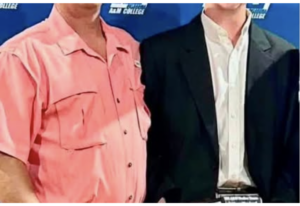
Tucker Earp and Jamie Earp Rodeo Obituary-When devastating news ripples through the tight-knit world of Western sports, it does not just make a headline; it shatters a family. The keyword on everyone’s mind lately has been the tragic Tucker Earp and Jamie Earp obituary, cause of death – rodeo community mourns loss of father and son . This isn’t just another passing news story about a traffic delay on an Oklahoma highway. It is a profound, heart-wrenching narrative about a father and son from Jay, Oklahoma, who lived and breathed the rodeo lifestyle, only to have their journey tragically cut short on their way home from doing what they loved most. Jamie Earp, 52, and his son Tucker Earp, 22, were the embodiment of cowboy culture—hardworking, dedicated, and deeply loved by their peers. Their sudden passing has left an unfillable void in the arenas they frequented and the community they called home.
In the days since the horrific crash on the Turner Turnpike, thousands of people have taken to social media, local news outlets, and digital memorial platforms to share their grief. The loss of a parent is devastating. The loss of a child is unbearable. Losing both simultaneously in a catastrophic event is a tragedy that defies comprehension. As we navigate the details surrounding their sudden passing, it is vital to move beyond the cold facts of a police report. We must honor who these two men truly were, explore the circumstances that led to this fateful day, and look closely at how a community bounds together when the world falls apart.
A Devastating Loss for the Oklahoma Rodeo Family
If you have ever spent time in a rodeo arena, you know that the atmosphere is unlike anywhere else on earth. The rodeo community is not just a group of athletes competing for buckles and prize money; it is an extended, fiercely loyal family. When the news broke about Jamie and Tucker Earp, a heavy, suffocating silence fell over arenas from Oklahoma to Texas. People didn’t just lose two competitors; they lost friends, mentors, and genuine cowboys who represented the very best of the Western way of life.
The Earp family, hailing from the small, proud town of Jay in northeastern Oklahoma, has always been synonymous with team roping. For decades, they traveled the grueling miles up and down the interstate system, hauling horses, maintaining rigs, and paying entry fees just for the thrill of a clean run. The rodeo family relies on each other. When a truck breaks down at 2:00 AM, it’s a fellow competitor who pulls over to help. When a young roper needs advice on his swing, it’s a veteran like Jamie who steps up. This inherent camaraderie makes the loss so incredibly painful. The grief currently washing over the Professional Rodeo Cowboys Association (PRCA) and the regional roping associations is palpable.
Friends and neighbors have flooded social media with memories that paint a vivid picture of the Earp men. They remember Jamie’s booming laugh and his willingness to help anyone back into the box. They remember Tucker’s infectious smile, his undeniable athletic talent, and the respectful “yes, sir” and “no, ma’am” that characterized his upbringing. In a modern world that often feels disconnected, the Earp family represented deep roots and authentic connection. Losing them is a stark reminder of our own mortality, leaving the entire community grappling with the fragility of life on the road.
Remembering Jamie Earp: A Lifetime Dedicated to the Roping Pen
To understand the magnitude of this loss, you have to understand the man Jamie Earp was. At 52 years old, Jamie was a fixture in the Oklahoma team roping scene. He wasn’t a fair-weather cowboy who only showed up when the sun was shining and the cattle were slow. Jamie was a relentless grinder, a man who possessed a profound, almost spiritual connection to his horses and the sport of team roping.
Growing up around livestock, Jamie learned early on that success in the arena is dictated by the hours you put in behind the scenes. It’s the early morning feedings in the dead of winter, the countless hours spent practicing on a mechanical dummy, and the unwavering patience required to train a young horse. Jamie embraced all of this. Friends recall that he had an uncanny ability to read cattle, a skill honed over thousands of hours in dusty practice pens. But more than his skill with a rope, Jamie was known for his immense heart.
He was the kind of neighbor who would drop everything to help you fix a fence or pull a calf. When prominent ropers like 16-time NFR qualifier Travis Graves spoke about Jamie, they didn’t just talk about his arena times; they talked about his character. Graves recalled how Jamie would show up to local practice nights in Jay, always offering a word of encouragement or a helpful tip to the younger generation. Jamie was deeply committed to passing the torch. He saw rodeo not just as a sport, but as a crucial vehicle for teaching respect, discipline, and grit. His greatest achievement, however, was clearly his family. Roping alongside his son Tucker wasn’t just a hobby; it was the realization of a lifelong dream, a bonding experience that tied their hearts together with every single loop.
Tucker Earp: A Bright Young Talent Taken Too Soon
Tucker Earp was only 22 years old, but he had already made a massive impression on everyone lucky enough to cross his path. When you are the son of a respected cowboy, the expectations are naturally high. But Tucker didn’t just meet those expectations; he shattered them with a quiet confidence and an incredible work ethic. He was the next generation of the Earp legacy, carrying forward the traditions his father had instilled in him since he was old enough to walk.
Those who knew Tucker describe him as an exceptional athlete and an even better friend. In the team roping world, your partner is everything. Tucker was known as an incredibly reliable partner, both inside and outside the arena. He was a great calf pusher—even on the days he didn’t feel like it—and a young man who listened more than he spoke. While many young men his age are consumed by the superficial distractions of the digital age, Tucker was grounded. His happiness was found in the smell of sweet feed, the rhythmic sound of hooves in dirt, and the camaraderie of his fellow ropers.
Beyond his athletic prowess, Tucker’s kindness stood out. Heartfelt tributes from family friends detail how Tucker would happily help older neighbors move furniture, sitting down afterward just to share a genuine conversation. He was described as larger than life, armed with an attitude that elevated the mood of any room he walked into. The tragedy of a 22-year-old passing is that we mourn not only the person they were, but the incredible potential of the person they were bound to become. Tucker had decades of roping, loving, and living ahead of him. The abrupt end to his promising story is a jagged pill that the community of Jay, and the broader rodeo world, will be trying to swallow for years to come.
The Final Ride: The All Star Team Roping Finals at Lazy E Arena
The timeline leading up to the tragedy paints a picture of a perfect cowboy weekend. Jamie and Tucker had spent the days prior competing at the prestigious All Star Team Roping Finals held at the iconic Lazy E Arena in Guthrie, Oklahoma. For those unfamiliar with the sport, the Lazy E is essentially hallowed ground. It is one of the premier equestrian facilities in the country, a massive red-dirt coliseum where dreams are realized, and champions are crowned.
Competing at the Lazy E is a highlight for any roper. The air is always thick with adrenaline, the smell of leather, and the sounds of announcers calling out times. For a father and son to rope together at such a major event is a beautiful thing. It requires flawless communication. The header has to catch the steer and turn it perfectly, setting up the heeler to sweep in and catch the hind legs. It is a dance of timing, horsepower, and trust. Jamie and Tucker executed this dance with the kind of unspoken intuition that only blood relatives possess.
Reports from that weekend indicate they were having a great time, surrounded by their rodeo family, telling stories by the trailers, and doing what they loved. The All Star Team Roping Finals is an event that draws the very best from across the region. It’s a place where old friends reconnect and new partnerships are forged. When the weekend concluded, they loaded their beloved horses into their trailer, packed their gear, and climbed into their pickup truck for the journey back to Jay. They were tired, surely, but likely filled with the deep, satisfying contentment that comes after a weekend of fierce competition. They were just headed home.
Understanding the Cause of Death: The Tragic Crash on the Turner Turnpike
The details surrounding the cause of death are as horrific as they are heartbreaking. On the afternoon of Wednesday, August 5, 2026, around 1:30 PM, Jamie and Tucker were traveling eastbound on Interstate 44, known locally as the Turner Turnpike. They were navigating the stretch of highway near mile marker 209, just west of the Sapulpa exit. The turnpike is a major, high-speed artery connecting Oklahoma City to Tulsa, frequently crowded with commercial semis and passenger vehicles.
According to reports from the Oklahoma Highway Patrol (OHP), for reasons that remain under investigation, the Earp’s truck, which was hauling their horse trailer, drifted to the right shoulder of the roadway. Tragically, a large commercial semi-truck, driven by a man from New York, was parked on the shoulder at that exact location. The resulting rear-end collision at highway speeds was catastrophic. The sheer force of a heavy pickup pulling a loaded horse trailer colliding with a stationary semi-truck is unimaginable.
Almost immediately following the impact, both the pickup truck and the semi-truck burst into flames. The fire was intense, rapid, and unrelenting, sending thick, black plumes of smoke high into the Oklahoma sky, visible for miles. Due to the severe nature of the impact and the subsequent fire, both Jamie and Tucker Earp were killed. The driver of the semi-truck managed to escape the inferno, suffering non-life-threatening injuries. The crash shut down the eastbound lanes of the Turner Turnpike for hours as emergency crews, fire departments, and hazardous material teams worked frantically to control the blaze and process the massive debris field. The horrifying nature of the crash adds profound trauma to the grief of their family, as the suddenness and violence of the event leave no room for goodbyes.
Heroism Amidst Tragedy: The Anonymous Rescue of the Horses
In the darkest of moments, humanity often finds a way to let a sliver of light shine through. While the human toll of the crash was devastating and absolute, a miraculous and heroic sub-story emerged from the burning wreckage. The Earp family’s trailer was carrying their prized roping horses—the very animals they had just competed with at the Lazy E Arena. Anyone who knows cowboys knows that their horses are not just property; they are family members, partners, and trusted friends.
As the flames rapidly consumed the front of the wreckage and threatened the trailer, passing motorists refused to simply drive by. Several good Samaritans pulled their vehicles over, risking their own lives in the face of immense heat and the threat of secondary explosions, to force open the back of the mangled horse trailer. Because of their fast, selfless actions, the two horses were safely extracted from the trailer before the fire could reach them.
These heroic individuals, who requested to remain anonymous, didn’t stop there. They carefully secured the terrified, disoriented animals, finding another empty horse trailer nearby to safely transport them away from the chaotic scene. The horses survived the ordeal with only minor injuries and have since been returned to the grieving Earp family. In a story completely dominated by heartbreak and loss, the bravery of these strangers provided one small, desperately needed miracle. For the Earp family, getting those horses back isn’t just about saving animals; it is about preserving the final living connections to Jamie and Tucker’s last weekend doing what they loved.
The Intersection of Public Tragedies, Media Presence, and Legal Philosophy
When we step back to examine the broader societal context of such a catastrophic event, we are forced to look at how modern media presence and legal philosophy shape our understanding of tragedy. There is a profound disparity in how the public consumes stories of loss versus stories of scandal. This divergence highlights fascinating elements of human psychology, media ethics, and the application of law.
High-Profile Media Scandals vs. Genuine Community Mourning
In today’s relentless digital news cycle, media presence is often heavily skewed toward the sensational, the malicious, and the scandalous. Consider the media circus surrounding notable cases involving public figures like Harvey Weinstein or Rudy Giuliani. When Harvey Weinstein’s decades of horrific abuse came to light, the media presence was absolute. Every courtroom sketch, every legal maneuver, and every tearful testimony was broadcast globally. Similarly, Rudy Giuliani’s spectacular legal and financial downfalls—featuring defamation trials, bankruptcies, and sweeping political scandals—consume thousands of hours of airtime. The public becomes ravenous for these stories because they feature identifiable villains, intentional wrongdoing, and the dramatic dismantling of power.
We watch these public figures fall, and we engage in national debates about accountability, power dynamics, and constitutional rights. But while the media hyper-fixates on the legal philosophies of criminal intent and defamation, the quiet, profound, and far more relatable tragedies of everyday citizens often receive nothing more than a passing headline. The devastating deaths of Jamie and Tucker Earp do not feature the malice of a Weinstein or the political theater of a Giuliani. Because it was an accident—a brutal, sudden twist of fate—the mainstream media quickly moves on.
Yet, the emotional weight and community impact of the Earp tragedy is arguably far more significant on a human level. The loss of a beloved father and son rips a hole in the fabric of a real, tangible community. Genuine community mourning doesn’t need a national news camera; it happens in church pews, in barn aisles, and in the quiet, tear-soaked embraces of neighbors. It forces us to ask: why do we allow our media diets to be dominated by the worst intentional acts of distant celebrities, while the profound, heart-shattering losses of good, hardworking people are relegated to local news briefs?
Legal Philosophy: Wrongful Death and Highway Negligence
Beyond the media lens, a tragedy of this magnitude inevitably intersects with complex legal philosophy. While the Weinstein and Giuliani cases involve the legal philosophies of intentional torts, criminal liability, and constitutional protections, highway accidents thrust us into the intricate world of negligence, duty of care, and wrongful death.
In civil legal philosophy, negligence is established when someone breaches a duty of care owed to another, directly causing harm. When a fatal collision occurs involving a parked commercial semi-truck on an interstate shoulder, the legal questions become highly technical. The Federal Motor Carrier Safety Administration (FMCSA) has strict guidelines dictating how, when, and where commercial drivers can park their massive rigs. Highway shoulders are designed for emergency use only, not for routine rest breaks or non-emergency stops, because stationary vehicles present a massive, lethal hazard to highway traffic moving at 75 miles per hour.
If the OHP investigation determines that the semi-truck was parked illegally or without proper emergency warning triangles deployed, the legal philosophy of wrongful death could come into play. Wrongful death statutes are designed to provide recourse to surviving family members when a loved one dies due to the negligence of another. It isn’t about vengeance; it is a foundational legal principle that attempts to assign financial accountability for the devastating loss of companionship, future earnings, and emotional support.
Conversely, if the semi-truck was parked due to a legitimate mechanical emergency, the legal focus might shift to why the Earp vehicle drifted onto the shoulder. Was there a tire blowout? A medical emergency? A mechanical failure on the truck or trailer? The legal philosophy of tort law requires meticulous accident reconstruction to find the truth. But regardless of the legal outcome, the ultimate reality remains unchanged: no courtroom victory, no insurance settlement, and no application of legal philosophy can ever bring back a father and son.
The Ripple Effect: How the Tight-Knit Rodeo Community Heals
The psychological impact of sudden loss is a beast that cannot be easily tamed. When an elderly person passes away after a long illness, there is a period of preparation. But when two vibrant, healthy men are taken in a split second on a sunny Wednesday afternoon, the psychological shockwave is paralyzing. The rodeo community is currently navigating this brutal terrain of grief.
Cowboys are historically stoic. They are taught to brush off the dirt, tape up the broken bones, and get back on the horse. But this kind of emotional trauma cannot just be walked off. We are seeing a shift in the culture, where tough men are openly sharing their broken hearts on social media, crying together, and admitting they don’t have the answers. This vulnerability is beautiful, and it is entirely necessary for healing.
Support for the Earp family has been monumental. Meal trains have been organized, GoFundMe campaigns have been established to help with funeral expenses, and memorial ropings are already being planned in their honor. The community heals by doing what they do best: showing up. They will show up to feed the remaining livestock. They will show up to mow the grass at the Earp property. They will show up, hats in hand, to ensure that the surviving family members know they are surrounded by an impenetrable wall of love.
Grief is not a linear process. There will be days of numb acceptance, followed by sudden, tsunami-like waves of crushing sadness, as friends have poignantly described online. But the rodeo community understands endurance. They know how to weather a storm together.
Advancing Equestrian and Highway Safety Protocols
Whenever a tragedy occurs on our highways, it is our moral obligation to ask how we can prevent it from happening again. Hauling horses is inherently dangerous. You are pulling thousands of pounds of shifting, live weight behind a vehicle at high speeds. The dynamics of stopping, turning, and reacting are completely altered.
This devastating incident must serve as a catalyst for a renewed conversation about highway safety, specifically concerning large rigs and trailers. First, there must be a louder push for enforcement regarding semi-truck parking on interstate shoulders. With the shortage of designated commercial truck parking nationwide, drivers often resort to the shoulder out of desperation to meet their federally mandated rest hours. This creates a deadly environment for all motorists. Infrastructure spending must prioritize the creation of safe, accessible parking for long-haul truckers to keep the shoulders clear for genuine emergencies.
Second, for the equestrian community, rig maintenance is paramount. Ensuring that trailer brakes are perfectly calibrated, tires are rated for the heavy loads and free of dry rot, and weight distribution is optimal can make the split-second difference in an emergency maneuver. Furthermore, installing dash cameras and internal trailer cameras can provide critical insights and peace of mind. While we do not yet know the specific mechanical factors that contributed to the Earp crash, the community can honor their memory by double-checking their own hitches, safety chains, and tire pressures before every single trip.
Honoring the Earp Legacy Moving Forward
As the sun sets on the arenas of Oklahoma, the shadows cast by the absence of Jamie and Tucker Earp are long and heavy. However, their legacy will not be defined by the fiery crash on the Turner Turnpike. Their legacy will be defined by the way they lived their lives.
They will be remembered in the perfect snap of a head rope. They will be remembered in the quiet, early morning hours at the barn, accompanied only by the soft nickering of horses. They will be remembered every time a veteran roper pulls a kid aside to offer a word of encouragement. Jamie and Tucker Earp lived a life of passion, dedication, and love.
As friends, family, and the broader rodeo world prepare to say their final earthly goodbyes, the request from those closest to them is simple: be kind to one another. Help your neighbors. Tell your family you love them before you pull out of the driveway. Live your life with the same joy, grit, and generosity that Jamie and Tucker brought to the arena every single day. The rodeo goes on, but the arena will never quite be the same without them.
Frequently Asked Questions (FAQ)
What was the cause of death for Jamie and Tucker Earp? Jamie Earp (52) and his son Tucker Earp (22) tragically passed away in a fiery vehicle collision on Wednesday, August 5, 2026. Their pickup truck, which was hauling a horse trailer, drifted onto the shoulder of the eastbound Turner Turnpike in Oklahoma and struck a parked commercial semi-truck. Both vehicles caught fire upon impact.
Where were Jamie and Tucker Earp from? The father and son were proud residents of Jay, Oklahoma, a small town with deep roots in agriculture and the rodeo community.
Where were they traveling from when the accident occurred? They were heading home after a successful weekend competing at the prestigious All Star Team Roping Finals held at the Lazy E Arena in Guthrie, Oklahoma.
What happened to the horses in the trailer? Miraculously, the two roping horses survived the crash. Several anonymous, heroic motorists pulled over immediately after the collision, forced open the mangled horse trailer, and safely evacuated the horses before the fire could reach them. The horses sustained only minor injuries and have been returned to the Earp family.
Did the driver of the semi-truck survive? Yes, the driver of the commercial semi-truck, a man from New York, was able to escape the blaze and sustained non-life-threatening injuries in the crash.
How is the rodeo community responding to the tragedy? The PRCA and the broader rodeo community are completely heartbroken. Tributes have flooded social media, highlighting Jamie’s mentorship and Tucker’s incredible athletic potential and kindness. The community is rallying around the surviving family members with meal trains, financial support, and profound emotional solidarity.
Are there ongoing investigations into the crash? Yes, the Oklahoma Highway Patrol (OHP) and local authorities are conducting a thorough investigation to determine the exact sequence of events, including why the pickup drifted onto the shoulder and whether the semi-truck was legally parked under FMCSA guidelines.
How can I honor the memory of Jamie and Tucker Earp? Those closest to the family have urged the public to remember who Jamie and Tucker truly were, rather than focusing solely on the tragedy. You can honor their legacy by supporting local rodeos, helping your neighbors, and approaching your passions with the same dedication and kindness they exhibited every day.